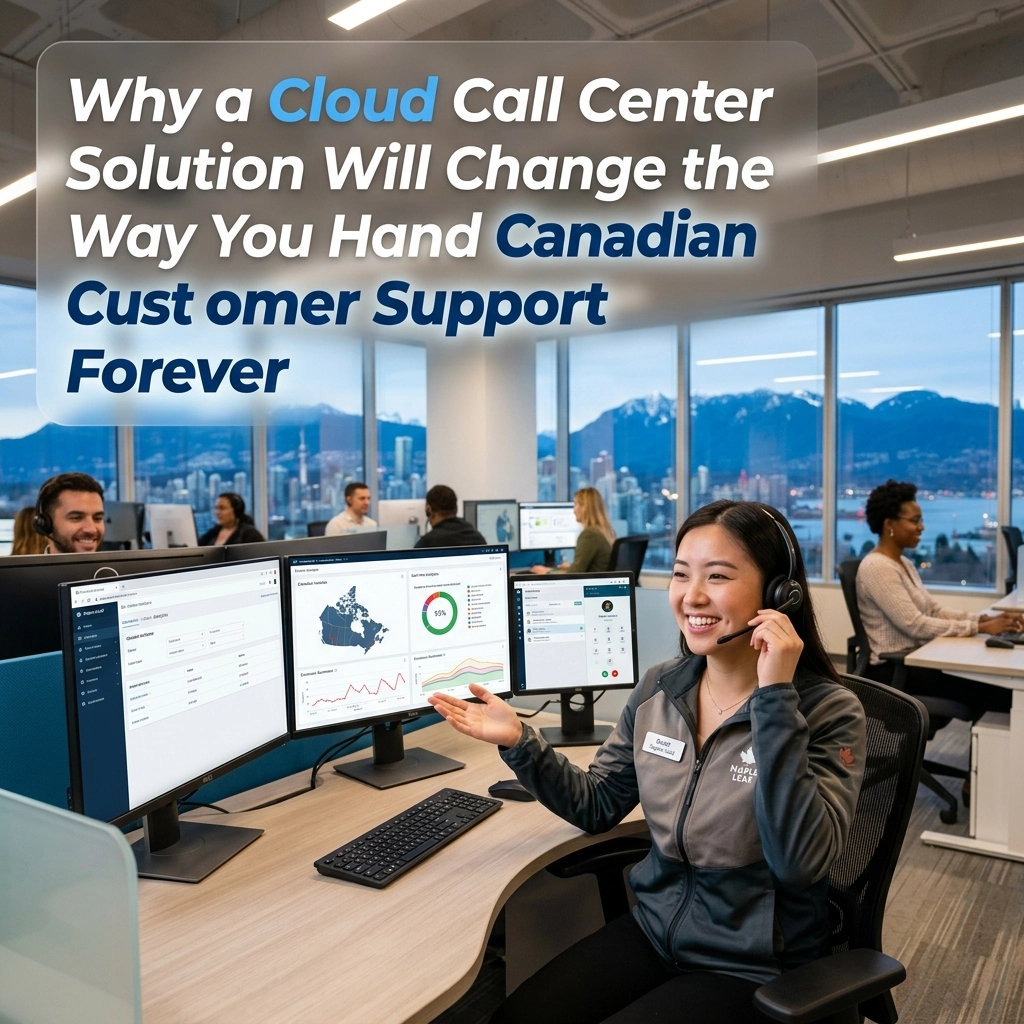
For many Canadian business owners, the "call center" image still conjures up rows of desks, tangled wires, and expensive server rooms humming in the back of the office. But the landscape of customer engagement has shifted dramatically. As we move further into 2026, the traditional on-premise PBX system isn't just an aging piece of hardware; for many, it has become a bottleneck to growth.
In Canada, we are seeing a unique technological divide. While global markets have aggressively moved to the cloud, nearly 70% of Canadian contact centers are still tethered to legacy on-premise systems. This gap presents a massive opportunity for forward-thinking businesses to gain a competitive edge by adopting business VoIP Canada solutions that prioritize flexibility and customer experience.
The Problem: The Hidden Costs of Legacy Support Systems
If you are still running your customer support through a traditional phone system, you are likely facing three major hurdles: high capital expenditure, limited scalability, and a fragmented customer experience.
Legacy systems require significant upfront investment in hardware and ongoing maintenance. When a part breaks or a software update is needed, you often have to wait for a technician to arrive on-site. Furthermore, these systems are notoriously difficult to scale. If your business experiences a seasonal surge: common in Canadian retail or tourism: adding new lines or features can take weeks, not hours.
Perhaps the most significant "hidden cost" is customer frustration. Modern customers don't just want to call you; they want to text, email, and chat. A legacy system keeps these channels in silos, forcing your agents to jump between screens and leaving your customers repeating their stories to different representatives.

What is a Cloud Call Center Solution?
At its core, a cloud call center (often referred to as Contact Center as a Service or CCaaS) is a platform where your communication infrastructure is hosted over the internet rather than on-site. It integrates seamlessly with your cloud pbx canada setup, allowing your team to handle interactions from anywhere with an internet connection.
Unlike a standard phone system, a cloud solution acts as a central hub for all customer touchpoints. It doesn't matter if the customer reaches out via a voice call, a Facebook message, or a website chat widget; the interaction is funneled into a single interface for your agents.
How Cloud Solutions Solve the "Wait Time" Crisis
One of the most compelling reasons to switch is the direct impact on customer satisfaction. Research indicates that for every 10 minutes a customer spends on hold, their satisfaction levels drop by about 3%. In an era where brand loyalty is fragile, those minutes matter.
Cloud solutions tackle this through several key features:
- Skill-Based Routing: Instead of sending every caller to a general queue, the system identifies the customer’s needs and routes them to the agent best equipped to help. This reduces transfers and speeds up resolution times.
- Intelligent Virtual Agents (IVAs): AI-powered bots can handle routine inquiries: like tracking a package or checking an account balance: freeing up your human agents for complex problem-solving.
- Queue Callbacks: Instead of making a customer wait on the line, the system offers a "callback" option. The customer hangs up, keeps their place in line, and receives an automated call once an agent is free.
Major Canadian institutions, such as TD Bank, have successfully utilized these technologies to reduce total customer wait times by millions of minutes annually. This isn't just a win for the customer; it’s a massive boost for operational efficiency.
The Power of Omnichannel Support
The term "omnichannel" is often thrown around in marketing, but in the context of a cloud call center, it is a game-changer. A true cloud solution provides a 360-degree view of the customer.
Imagine a customer who sends a tweet about a billing issue on Monday, then calls your support line on Tuesday. With a legacy system, the phone agent would have no idea about the tweet. With a cloud-based business VoIP Canada solution, the agent sees the entire history on one screen. This context allows for a more personalized, efficient interaction that makes the customer feel valued rather than like just another ticket number.

Scaling Your Business Without the "Growing Pains"
For a growing Canadian business, geographic boundaries are becoming less relevant. A cloud call center allows you to hire the best talent across the country, whether they are in Toronto, Vancouver, or Halifax.
Because the system is hosted in the cloud, onboarding a remote agent is as simple as sending them a login and a high-quality IP phone. You no longer need to worry about the physical limitations of your office space or the capacity of your local server. If you need to add ten agents for a holiday rush, you can do so with a few clicks in an admin portal.
The Infrastructure Foundation: Don't Forget the Wiring
While the software lives in the cloud, your local office performance still relies on a solid physical foundation. We often see businesses upgrade to sophisticated cloud software only to be let down by an unstable local network.
This is where structured cabling services become essential. To ensure your voice calls are crystal clear and your data flows without interruption, your office requires high-quality Cat6 or fiber optic cabling. Investing in professional networking ensures that your "cloud" experience isn't ruined by "on-ground" connectivity issues.
Data-Driven Decision Making
One of the most overlooked benefits of moving to a cloud solution is the wealth of data it provides. Traditional systems offer basic logs: who called whom and for how long. Cloud platforms provide deep analytics, including:
- Sentiment Analysis: Using AI to determine if a customer is frustrated or happy during a call.
- Peak Hour Tracking: Identifying exactly when your call volume spikes so you can staff appropriately.
- Agent Performance Metrics: Tracking first-call resolution rates and average handling times in real-time.
These insights allow management to move away from "gut feelings" and toward data-backed strategies that improve the bottom line.

Security and Reliability in the Canadian Context
Data privacy is a top priority for Canadian businesses, especially with regulations like PIPEDA. Modern cloud providers invest billions in security infrastructure that would be impossible for a single small-to-medium business to replicate.
Furthermore, cloud systems offer built-in disaster recovery. If a snowstorm knocks out power to your main office, your call center doesn't go dark. Your agents can simply log in from their homes or a backup location, ensuring that your customer support remains "always on." For more information on how emergency services are handled in this environment, you can view our 911 explained page.
Making the Transition: Where to Start?
Moving to a cloud call center solution doesn't have to be a "rip and replace" nightmare. The transition is usually smoother than most business owners expect.
- Step 1: Audit Your Current Usage: How many calls do you take? What channels do your customers use most?
- Step 2: Evaluate Your Network: Ensure your internet connection and structured cabling can handle the increased VoIP traffic.
- Step 3: Choose the Right Partner: Look for a provider that understands the Canadian market and offers local support.
- Step 4: Train Your Team: The software is often very intuitive, but a little training goes a long way in ensuring your agents use the new tools to their full potential.
Conclusion: The Future of Canadian Support
The shift to cloud call center solutions isn't just a trend; it's a fundamental evolution in how businesses interact with their customers. By embracing cloud pbx canada technology, you are removing the physical and technical barriers that prevent your team from delivering exceptional service.
At Voiswitch, we help Canadian businesses navigate this transition every day. Whether you are looking for a complete contact center overhaul or simply want to improve your office's business internet and connectivity, we have the expertise to guide you.
The question is no longer if you should move to the cloud, but when. In a competitive market, the businesses that prioritize seamless, efficient, and modern customer support are the ones that will thrive.
If you're ready to see how a cloud solution can transform your operations, feel free to visit our contact page or explore our FAQ to learn more about how we can help your business grow.