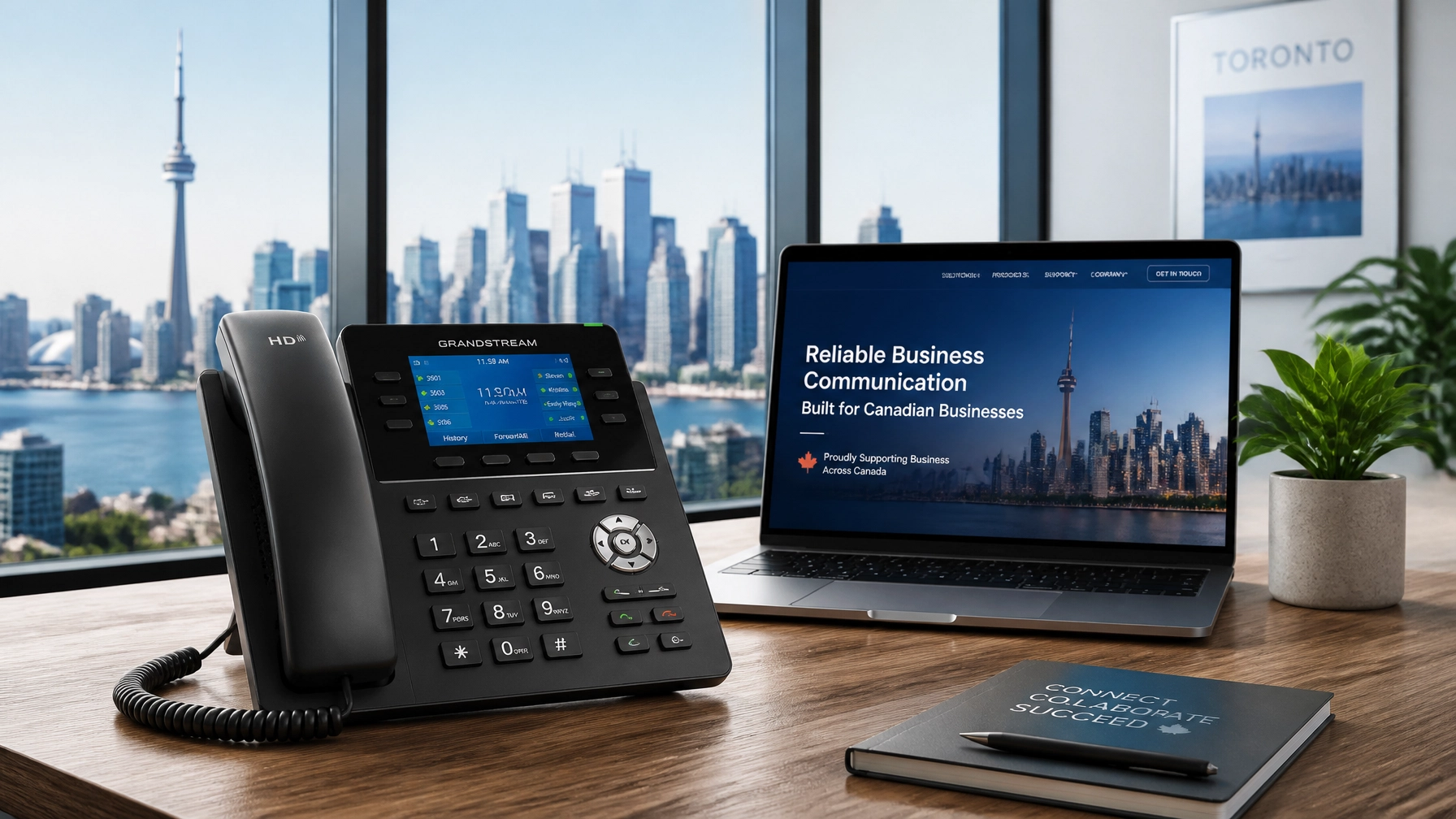
Choosing a business internet provider in Canada isn't as simple as picking the fastest speed for the lowest price. For a homeowner, a brief outage is an inconvenience; for a business, it is a liability. Whether you are running a retail shop in Toronto or a large-scale manufacturing plant in Calgary, your internet is the backbone of your operations. It powers your Cloud PBX systems, processes your credit card transactions, and connects your team to global clients.
Before you sign a three-year contract that locks your business into a specific service level, you need to look beyond the "up to 1Gbps" marketing slogans. Here are the 10 critical factors you must evaluate to ensure your business stays online, productive, and profitable.
1. Is the Connection Dedicated or Shared?
The most common pitfall for small businesses is signing up for a "Business Grade" connection that is actually a shared (contended) line. Most cable (coax) and DSL connections are shared with neighboring buildings. During peak hours, you may experience significant speed drops because your neighbors are also pulling from the same local node.
A Dedicated Internet Access (DIA) connection provides a private lane for your data. You get 100% of the bandwidth you pay for, 24/7. While DIA is more expensive than standard broadband, it is the only way to ensure your SIP Trunks never experience "choppy" audio or dropped calls due to network congestion.
2. Symmetric vs. Asymmetric Speeds: Why Upload Matters
Residential internet is almost always asymmetric: fast download, slow upload. This works for Netflix, but it fails for modern business. If your provider offers "300 Mbps," check the fine print for the upload speed. Often, it is as low as 15 or 30 Mbps.
As a business, you are constantly uploading data:
- Sending large files to clients.
- Hosting video conferences (Zoom, Teams).
- Running Cloud Call Center software.
- Backing up data to the cloud.
If your upload speed is a bottleneck, your entire operation will feel sluggish, regardless of how fast your download speed is.
3. The Power of the Service Level Agreement (SLA)
An SLA is a legal contract that guarantees your provider will meet specific performance standards. If they fail, they owe you money (service credits). Most residential-grade business plans have "best effort" delivery, meaning there is no financial penalty if the internet goes down for three days.
A professional SLA should cover:
- Uptime: Look for 99.9% or higher.
- Time to Repair (TTR): How quickly will they have a technician on-site?
- Latency & Jitter: Essential metrics for voice and video quality.
4. Latency, Jitter, and Your VoIP Health
Speed isn't the only metric that matters. For real-time applications like Business VoIP Canada, latency (the delay in data travel) and jitter (the variation in that delay) are even more important.
High latency causes that awkward "talking over each other" delay during phone calls. High jitter causes audio to sound robotic or broken. When evaluating a provider, ask about their peering agreements and network stability. At Voiswitch, we prioritize low-latency routing to ensure our IP phones deliver crystal-clear audio every time.
5. Fiber Optic vs. Coax: Know the Difference
In Canada, you will likely choose between Fiber and Coax (Cable).
- Fiber Optic: The gold standard. It uses light to transmit data, making it immune to electrical interference and capable of massive symmetric speeds. It is the most reliable choice for structured cabling services.
- Coax: Uses copper wires. It is widely available and cheaper, but it is more susceptible to weather-related outages and signal degradation over long distances.
If your business relies on 100% uptime, Fiber is the logical choice.
6. Static vs. Dynamic IP Addresses
A standard internet connection gives you a dynamic IP address that changes periodically. This is fine for browsing, but businesses often need a Static IP. You will need a static IP if you:
- Host your own email or web servers.
- Run a VPN for remote employees.
- Manage an on-premise PBX installation.
- Use certain security camera systems.
Ensure your provider can offer at least one static IP, and check if there are monthly fees associated with it.

7. Redundancy and Failover Solutions
Even the best fiber line can be cut by a construction crew. What happens to your business then? A professional internet strategy includes redundancy.
Look for providers that offer an LTE/5G failover. This system automatically switches your traffic to a cellular network if the main line goes down. While it might be slower, it keeps your credit card machines working and your Cloud PBX online while the physical line is being repaired.
8. Scalability: Can They Grow With You?
Can your provider handle your growth? If you start with 10 employees and grow to 50, you don't want to replace your entire infrastructure. Ask if they offer "burstable" bandwidth or if you can upgrade your speeds with a simple phone call rather than a new equipment installation.
Scalability also applies to your hardware. Ensure the routers and switches provided can handle higher throughput as your team expands.
9. Hidden Fees and Contract Lengths
The Canadian telecom market is famous for long-term contracts. While a 36-month or 60-month term often secures a lower monthly rate, it can be a trap if the service is poor.
Look out for:
- Installation fees: Can be thousands of dollars if fiber isn't already in the building.
- Equipment rentals: These add up over years. It is often cheaper to purchase your own IP PBX hardware.
- Early Termination Fees (ETF): Understand exactly what it costs to leave if the provider doesn't deliver on their promises.
10. Local Support vs. Overseas Call Centers
When your internet is down, you don't want to spend 45 minutes on hold with a call center halfway across the world. You need a partner who understands the Canadian business landscape.
One of our main USPs at Voiswitch is our award-winning 24/7 customer support. We provide end-to-end solutions, meaning the same team that manages your internet also understands your structured cabling and your phone system. This eliminates the "finger-pointing" that happens when multiple vendors are involved.
Conclusion: Don't Settle for Residential Grade
Your business internet is an investment, not just a bill. By focusing on dedicated connections, symmetric speeds, and strong SLAs, you remove the "headaches" and "liabilities" that come with cheap broadband.
At Voiswitch, we specialize in providing Canadian businesses with more than just a connection: we provide a complete communication infrastructure. From Cloud PBX to professional networking and IP phones, we ensure your business stays connected and competitive.
Ready to upgrade your business connectivity? Contact Voiswitch today for a custom quote tailored to your business needs.