For many years, the world of business telecommunications was split into two distinct silos. On one side, you had the physical infrastructure: the copper wires and "grey boxes" mounted on the walls of telephone closets. On the other, you had the digital software that managed your calls.
As Canadian businesses transition to Cloud PBX Canada solutions, there is a common misconception that because the "brains" of the phone system are in the cloud, the physical wiring in the office no longer matters. In reality, the opposite is true. The move to a hosted environment makes your local network more critical than ever.
If your "pipes" are old, clogged, or poorly organized, your state-of-the-art business VoIP Canada system will suffer from dropped calls, static, and lag. This guide will walk you through how to integrate professional structured cabling services into your Cloud PBX rollout to ensure a seamless, high-performance communication environment.
What Is Structured Cabling and Why Does It Matter for VoIP?
Before diving into the integration steps, it is essential to understand what we mean by "structured cabling." Unlike the "spaghetti" wiring often found behind desks or in old server rooms, structured cabling is a standardized approach to building an office's telecommunications infrastructure.
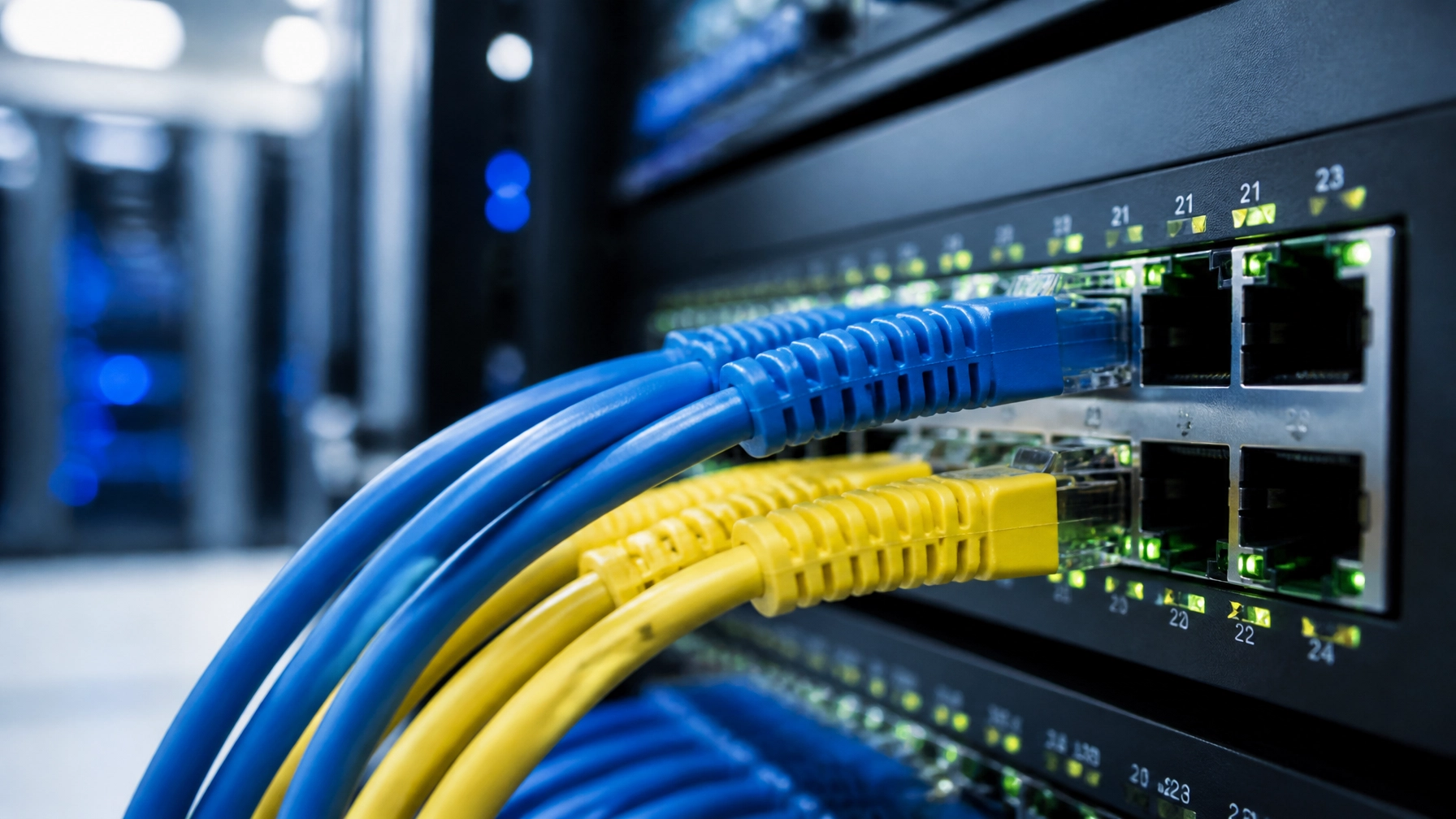
It involves a series of patch panels, trunks, and jacks designed to handle multiple hardware uses: from your high-speed internet and IP phones to security cameras and wireless access points.
The Foundation of Voice Quality
In a Cloud PBX environment, your voice is converted into data packets. These packets are sensitive to timing. If they arrive out of order or are delayed by faulty wiring, your conversation will sound choppy. Professional structured cabling services provide the reliable, high-bandwidth highway these data packets need to travel from your desk to the internet gateway without interference.
Problem vs. Solution: The Liability of Legacy Wiring
Many older offices in Canada still rely on "daisy-chained" phone lines or Category 3 (Cat3) cabling. While these worked fine for traditional analog phones, they are a major liability for modern VoIP.
- The Problem: Legacy wiring often leads to "jitter" (variation in packet arrival time) and "latency" (delay). This results in frustrated employees and unprofessional customer interactions.
- The Solution: A modern Cat6 or Cat6A cabling infrastructure provides the shielding and speed required to support dozens of concurrent high-definition voice calls alongside heavy data traffic.

Step-by-Step Integration Guide for Your Cloud PBX Rollout
Integrating cabling with a cloud rollout isn't just about pulling wires; it's about strategic planning. Here is the roadmap we follow at Voiswitch to ensure our Canadian clients get the most out of their investment.
1. Conduct a Comprehensive Site Audit
Before ordering a single IP PBX or phone, you must know what you are working with. A professional audit looks for:
- Cable Category: Are you currently using Cat5, Cat5e, or Cat6?
- Pathways: Are cables running near high-voltage power lines? This can cause electromagnetic interference (EMI) that ruins call quality.
- Termination Points: Are your patch panels labeled correctly?
2. Design for "Home Runs"
In the world of structured cabling, a "home run" means every single wall jack has a dedicated, continuous cable running all the way back to the central patch panel in your server room. We strongly advise against using "splitters" or small desktop switches to share one wall port between a PC and a phone. For a truly reliable business VoIP Canada setup, each phone should have its own dedicated port.
3. Incorporate Power over Ethernet (PoE)
One of the biggest benefits of modern cabling is Power over Ethernet. High-quality routers and switches can send both data and electricity through the same Cat6 cable.
- Eliminate Clutter: You no longer need a bulky power adapter at every desk.
- Centralized Backup: If your server room has an Uninterruptible Power Supply (UPS), all your IP phones will stay powered on even during a local power outage.
4. Implement Voice VLANs and Quality of Service (QoS)
This is where the physical cabling meets network logic. During your rollout, your IT partner should configure your switches to recognize "Voice" traffic as a priority. By placing your phones on a separate Virtual Local Area Network (VLAN), you protect your voice calls from being interrupted when someone else in the office starts a large file download.

Technical Specifications: Choosing the Right Standards
When you hire structured cabling services, you will be asked to choose between different cable categories. For most Canadian businesses rolling out Cloud PBX, here is our recommendation:
- Cat5e: The bare minimum. It supports speeds up to 1Gbps. While it works for VoIP, it lacks the shielding found in newer standards.
- Cat6: The "Sweet Spot." It features better insulation and reduces "crosstalk" (signals bleeding between wires). It is the standard for most modern office builds in Canada.
- Cat6A: Future-proofing. If your business handles massive data sets or video conferencing, Cat6A offers 10Gbps speeds and superior performance over longer distances.
The Role of the Patch Panel
The patch panel is the "switchboard" of your office. By integrating a clearly labeled patch panel system, you make future maintenance a breeze. If a desk moves or a new employee joins, you simply "patch" their desk port into the correct switch port in seconds, without having to run new wires through the ceiling.
E911 Compliance and the Physical Link
In Canada, the CRTC has strict requirements for Emergency 911 services. When an employee dials 911 from a cloud PBX Canada system, the emergency operator needs to know exactly where that caller is located.
Properly documented structured cabling makes this possible. By mapping each physical cable run (Jack ID) to a specific room or desk in your office, you can ensure your Cloud PBX provider has the most accurate location data on file. This is not just a technical "nice-to-have": it is a critical safety and compliance requirement.

Why a Single-Source Provider is the Best Choice
Managing a Cloud PBX rollout is complex enough. When you hire one company for the software, another for the internet, and a third for the cabling, you often end up in a "finger-pointing" loop if something goes wrong.
At Voiswitch, we provide end-to-end solutions. We don't just ship you phones and wish you luck. We can handle the physical installation of your structured cabling services, set up your high-speed business internet, and configure your Cloud PBX.
The benefits of this "one-stop" approach include:
- No Accountability Gaps: If there is a "hiss" on the line, we don't blame the cabling guy: we are the cabling guy. We fix it.
- Cohesive Design: We ensure your cabling infrastructure is perfectly matched to the requirements of your specific IP phones.
- Lower Total Cost: Bundling installation and service is often more cost-effective than hiring multiple niche contractors.
Conclusion: Removing the "Headache" of Poor Connectivity
The move to the cloud should simplify your business, not add to your stress. By treating structured cabling as a foundational part of your Cloud PBX rollout, you remove the physical variables that lead to poor call quality.
A well-designed cabling system is a "set it and forget it" asset. Once installed correctly, it will serve your business for 15 to 20 years, supporting not just your current phone system, but every digital innovation that comes next.
If you are planning a communication upgrade and want to ensure your physical foundation is as modern as your software, contact Voiswitch today for a consultation. We help Canadian businesses bridge the gap between their office walls and the cloud.