

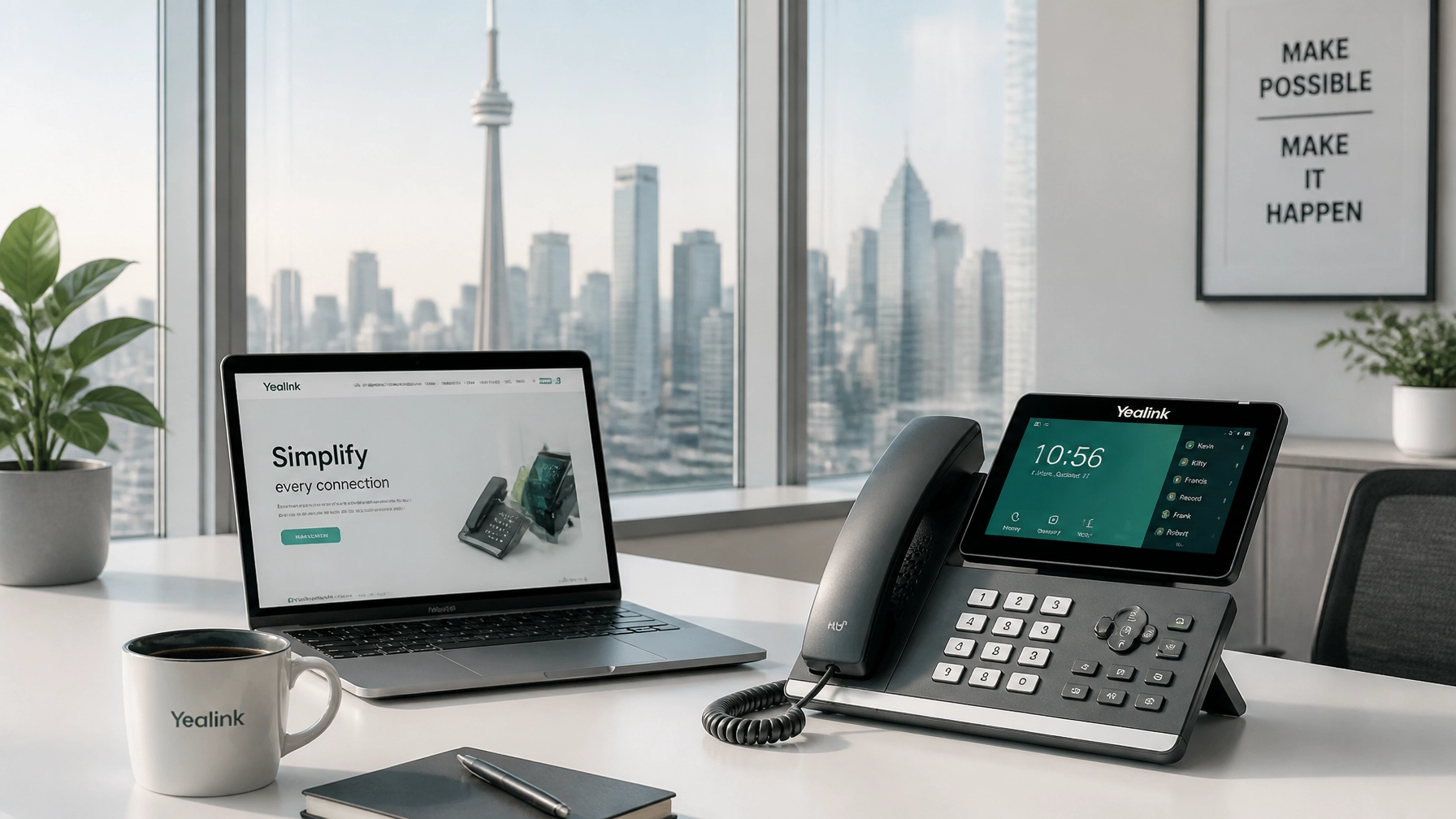
For decades, the "brain" of a Canadian office was a beige box bolted to a backroom wall, the on-premise PBX. It was expensive to install, a headache to maintain, and completely useless the moment an employee stepped out the front door. Fast forward to today, and the business landscape has fundamentally shifted. Whether you are a small startup in Halifax or a large enterprise in Vancouver, the expectation is now "work from anywhere."
To meet this demand, businesses are trading their heavy hardware for the flexibility of cloud PBX canada solutions. But moving your communications to the cloud isn't just about saving space in the server room; it’s about building a foundation for a hybrid workforce that is just as productive at a kitchen table as they are in a boardroom.
What is Cloud PBX and Why Does it Matter?
A Cloud PBX (Private Branch Exchange) is a business phone system hosted entirely over the internet. Instead of physical phone lines coming into your building, your voice traffic travels via your business internet connection to a secure data center.
The Problem vs. The Solution
- The Legacy Problem: Traditional systems are tethered to a physical location. If your office loses power or your team needs to work from home, your phones go dark. Scaling requires buying more cards, more wires, and waiting for a technician.
- The Cloud Solution: Your phone system exists as software. You can add a new extension in seconds through a web portal. Because it’s hosted in the cloud, your "office" is wherever your laptop or smartphone happens to be.

4 Reasons Cloud PBX is the Backbone of Hybrid Work
In a hybrid model, communication is often the first thing to break. If a customer calls the office and nobody is there to answer, or if they can't reach a remote employee, you lose business. Business VoIP Canada services solve this by creating a unified experience.
1. Mobility Without Compromise
With a cloud system, your business number follows you. You can answer a call on your desk phone, "flip" it to your mobile app as you walk to your car, and finish the conversation on your laptop at home. Your customers never know the difference, and your personal cell number remains private.
2. Seamless Collaboration (UCaaS)
Modern cloud PBX is more than just voice. It’s part of a Unified Communications as a Service (UCaaS) stack. This means video conferencing, team chat, and SMS are all integrated into one platform. For a distributed Canadian team, this eliminates the need for five different apps to stay in touch.
3. Business Continuity in a Canadian Climate
From ice storms in Quebec to heatwaves in BC, local disruptions are a reality. Since your phone system is hosted in geo-redundant data centers, your Cloud PBX remains online even if your physical office is inaccessible. Calls can be automatically routed to mobile devices or other branches instantly.
4. Predictable OPEX Costs
Instead of a massive upfront capital expenditure (CAPEX) for hardware, you pay a predictable monthly fee per user. This allows small businesses to access enterprise-grade features, like auto-attendants and call queues, without the enterprise price tag.
Choosing the Right Hardware: IP Phone Reviews
While many hybrid workers prefer "softphones" on their computers, many professionals still want the reliability of a physical desk phone. For 2026, two brands continue to lead the market in reliability and feature sets: Yealink and Poly.

Yealink: The Small-to-Mid Business Favorite
Yealink has become a go-to for Canadian SMBs due to its incredible value.
- Yealink T54W: A powerhouse for managers. It features a tilting color display, built-in Bluetooth, and Wi-Fi. It’s perfect for offices where running new wires isn't an option.
- Yealink T57W: If you handle a high volume of calls, the large touchscreen on the T57W makes managing multiple lines and transfers effortless.
Poly (formerly Polycom): The Enterprise Standard
Poly is renowned for its industry-leading audio quality.
- Poly Edge E450: Designed specifically for hybrid offices, this phone looks sleek and features "Acoustic Fence" technology, which blocks out background noise, ideal if your office has an open-concept layout.
- Poly VVX 450: A reliable 12-line workhorse that is a staple in reception areas across the country.
The Foundation: Why Structured Cabling Still Matters
Even in a "cloud" world, your on-site infrastructure is critical. If your office Wi-Fi is spotty or your cables are outdated, your voice quality will suffer. This is where structured cabling services come into play.

To get the most out of your VoIP system, your office network needs:
- Cat6 Cabling: While Cat5e works, Cat6 is the standard for 2026. It provides more bandwidth and better protection against interference, ensuring crystal-clear calls.
- PoE (Power over Ethernet) Switches: These allow you to power your IP phones through the network cable itself, eliminating messy power bricks at every desk.
- Quality of Service (QoS): Your router must be configured to prioritize voice traffic. Without QoS, a large file download in the accounting department could cause your CEO’s phone call to drop or sound "choppy."
How to Successfully Implement Cloud PBX in Canada
Moving to the cloud should be a "headache-free" experience. If you are ready to make the switch, follow these three steps:
- Audit Your Connectivity: Ensure your business internet has enough "upload" bandwidth. We recommend at least 100kbps per concurrent call.
- Choose a Local Partner: While there are many global providers, a Canadian-based provider understands our specific regulatory environment (like E911 requirements) and can offer on-site support for installation and cabling.
- Pilot and Train: Start with a small group of hybrid workers. Let them test the mobile apps and softphones. Once they are comfortable, roll it out to the rest of the team.

Frequently Asked Questions
Can I keep my existing Canadian phone numbers?
Absolutely. You can "port" your existing local and toll-free numbers from any Canadian carrier over to a cloud provider.
Does Cloud PBX work with my existing on-premise system?
If you aren't ready to fully commit to the cloud, you can use SIP Trunks to connect your legacy PBX to the internet, giving you many of the cost benefits of VoIP while keeping your current hardware.
Is it secure?
Yes. Modern cloud PBX providers use advanced encryption for voice traffic and offer multi-factor authentication (MFA) to protect your admin portals.
Conclusion: Flexibility is Your Competitive Advantage
The "old way" of doing business: where work only happened at a desk in a specific building: is gone. To succeed in 2026 and beyond, Canadian businesses need tools that are as mobile and resilient as their people.
By combining the power of cloud pbx canada with a solid foundation of structured cabling and professional networking, you remove the technical barriers to growth. You stop worrying about phone lines and start focusing on your customers.
Ready to upgrade your business communication? Contact the experts at Voiswitch today for a custom consultation.

