
Communication is the heartbeat of any successful enterprise. In the Canadian business landscape, the way we connect with clients, partners, and team members has undergone a massive transformation. Gone are the days when a simple wall-mounted landline and a bulky filing cabinet were enough to run an office. Today, the shift toward digital solutions isn't just a trend, it's a necessity for survival.
As revenue from traditional landline services in Canada has dropped significantly over the last few years, businesses from Toronto to Vancouver are looking for smarter, more cost-effective ways to talk. Whether you’re a startup looking for your first professional number or an established firm needing to upgrade a legacy setup, this guide will walk you through everything you need to know about business voip canada and modern office communication.
What Exactly is a Business Phone System?
At its core, a business phone system is a multiline communication setup designed to handle the complex needs of a professional environment. Unlike a personal cell phone or a residential landline, these systems offer centralized management, professional greetings (Auto-Attendants), and the ability to route calls across multiple departments or physical locations.
In 2026, a "phone system" is no longer just about voice. It’s an integrated platform that handles video conferencing, instant messaging, and voicemail-to-email, all while sharing a unified business identity.
The Evolution: From PSTN to Cloud PBX Canada
To understand where we are going, we have to look at where we started. For decades, the "gold standard" was the PSTN (Plain Old Telephone Service). It was reliable but incredibly rigid. If you wanted a new line, a technician had to physically come to your office and run wires.
The Problem: Legacy Limitations
Traditional PBX (Private Branch Exchange) systems required massive hardware boxes kept in a closet. They were expensive to buy, expensive to maintain, and if your office moved, the headache of transferring the system was enough to make any business owner cringe.
The Solution: Cloud PBX and VoIP
This is where cloud pbx canada comes into play. Instead of owning a physical box in a closet, your phone system lives in a secure data center. You access its features over the internet. This shift has democratized high-end communication features for small businesses that previously couldn't afford them.

Why Modern Businesses are Switching to VoIP
If you are still on a traditional landline, you are likely overpaying for fewer features. Here is why Canadian businesses are flocking to business voip canada solutions:
- Massive Cost Savings: Traditional carriers often charge per line and per minute for long-distance. VoIP utilizes your existing internet connection, drastically reducing monthly overhead.
- Scalability: Need to hire five new employees? You don’t need a technician. You can add extensions and IP phones in a matter of clicks.
- Mobility and Remote Work: With a virtual system, your office extension can live on your smartphone or laptop. This allows your team to work from home or on the road while appearing to be at their desk.
- Professional Image: Even a one-person operation can sound like a global corporation with professional hold music, "Press 1 for Sales," and automated directories.
Essential Hardware for Your Modern Office
While the "brain" of your phone system might be in the cloud, you still need the right tools on your desk to ensure crystal-clear audio and reliable performance. Choosing the right hardware is just as important as choosing the right service provider.
1. IP Phones
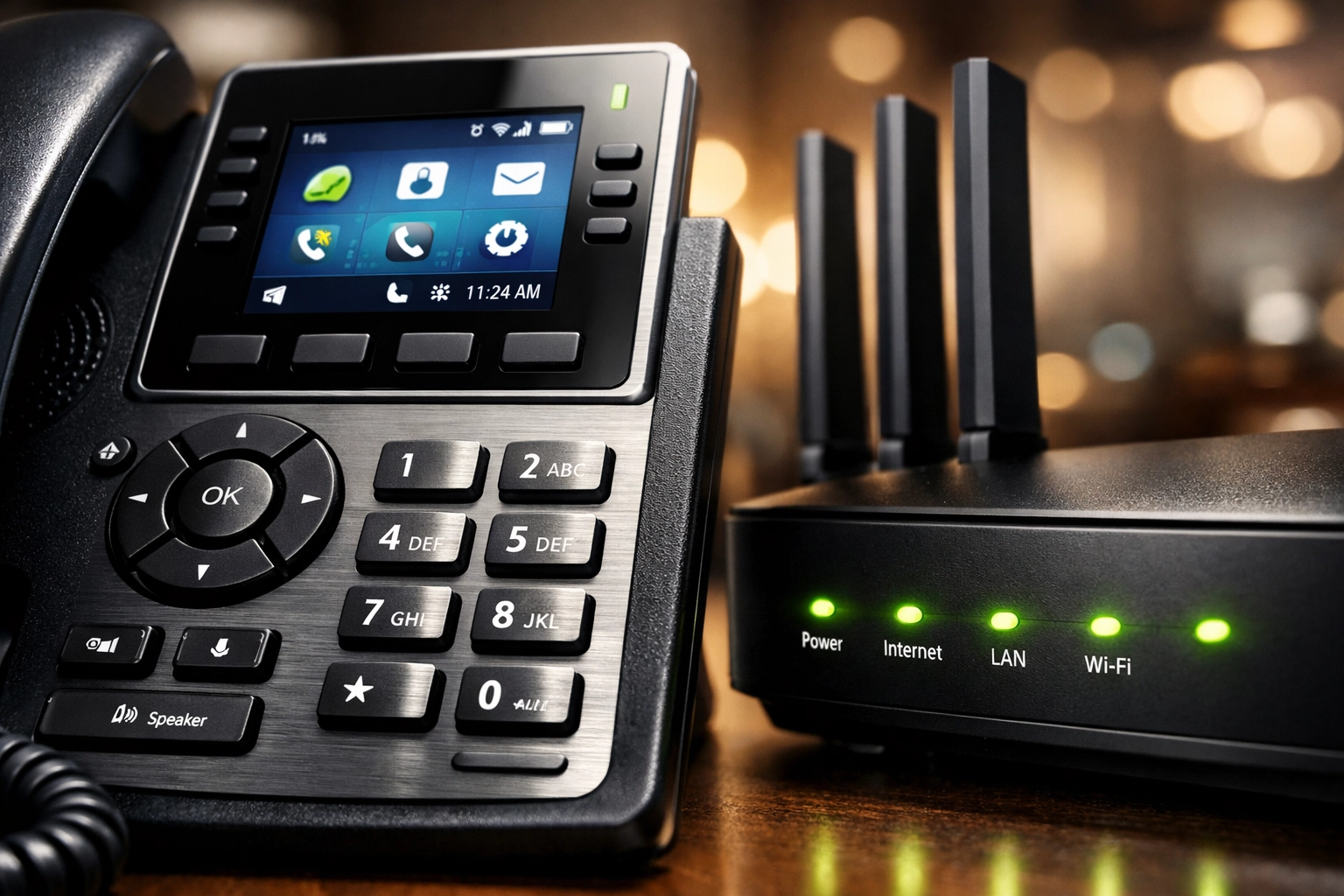
These are the most common hardware choices. Unlike old analog phones, an IP phone plugs directly into your internet router or network switch. Brands like Grandstream offer a range of options from basic desk units to high-end video phones for executive suites.
2. Routers and Networking
Your phone system is only as good as your internet connection. To avoid "jitter" or dropped calls, you need professional-grade routers that can prioritize voice traffic over standard data (like someone downloading a large file in the next room).
3. VoIP Adapters (ATA)
If you have a favorite analog phone or a legacy fax machine you simply can't give up, VoIP adapters (ATA) allow you to bridge the gap between old-school hardware and modern digital lines.
The Foundation: Structured Cabling Services
One mistake many beginners make is focusing entirely on the software and forgetting the physical foundation. This is where structured cabling services come in.
Imagine trying to drive a Ferrari on a dirt road; you’re never going to get the performance you paid for. Structured cabling is the "highway" inside your walls. It involves a planned approach to installing Cat6 or Cat6a cables, patch panels, and racks to ensure your data and voice signals travel without interference.
Poor cabling leads to:
- Intermittent call drops.
- Static or "robotic" voices.
- Slow internet speeds.
- Difficulties when trying to troubleshoot network issues.
Investing in professional cabling from the start saves thousands of dollars in technical debt down the line.
Key Features Every Canadian Business Needs
When evaluating a new system, don't get distracted by "flashy" features you'll never use. Focus on the fundamentals that drive efficiency:
- Auto-Attendant: An automated receptionist that directs callers to the right person.
- Ring Groups: Allows multiple phones to ring simultaneously (e.g., everyone in "Support" gets the call).
- Voicemail-to-Email: Get your messages delivered as audio files to your inbox so you never miss a lead.
- Conferencing: For high-stakes meetings, dedicated conference phones provide 360-degree audio pickup that a standard cell phone simply can't match.
- Paging and Intercom: Vital for warehouses or large retail spaces where you need to reach the entire team at once using paging systems.

Troubleshooting and Tips for New Users
Transitioning to a new system can have a learning curve. Here are three tips to ensure a smooth rollout:
1. Test Your Bandwidth
Before signing a contract, run a "VoIP Speed Test." You need to ensure your upload speed can handle the number of concurrent calls your office typically makes. Generally, each high-definition voice call requires about 100kbps of bandwidth.
2. Power Over Ethernet (PoE)
Whenever possible, use PoE switches. This allows your IP phones to draw power directly from the ethernet cable, eliminating the need for messy power bricks at every desk and ensuring your phones stay on during minor power flickers if your main switch is on a UPS (Uninterruptible Power Supply).
3. Quality of Service (QoS)
Ask your IT provider to enable "QoS" on your router. This tells the network that "Voice is more important than Netflix." It ensures that even if the network is busy, your phone calls remain clear and uninterrupted.
Choosing the Right Partner in Canada
The Canadian market is unique. Between our geography and specific regulatory environment, you want a provider that understands the local landscape. When looking for business voip canada providers, check for:
- Local support teams (no one wants to call for help and end up in a timezone 12 hours away).
- Compliance with CRTC regulations.
- A proven track record with structured cabling services if you are setting up a physical office.

Final Thoughts: Future-Proofing Your Business
The world of telecommunications isn't going backward. The flexibility, cost-savings, and advanced features of modern IP-based systems have made traditional landlines a liability rather than an asset.
By mastering the basics of cloud pbx canada and ensuring your physical infrastructure (cabling and hardware) is up to par, you aren't just buying a phone system; you’re building a platform for growth. Whether you are adding expansion modules for a busy receptionist or installing IP door phones for office security, the modern VoIP ecosystem is designed to grow with you.
Don't let outdated technology be the bottleneck in your business communication. Take the first step toward a clearer, more professional future today.