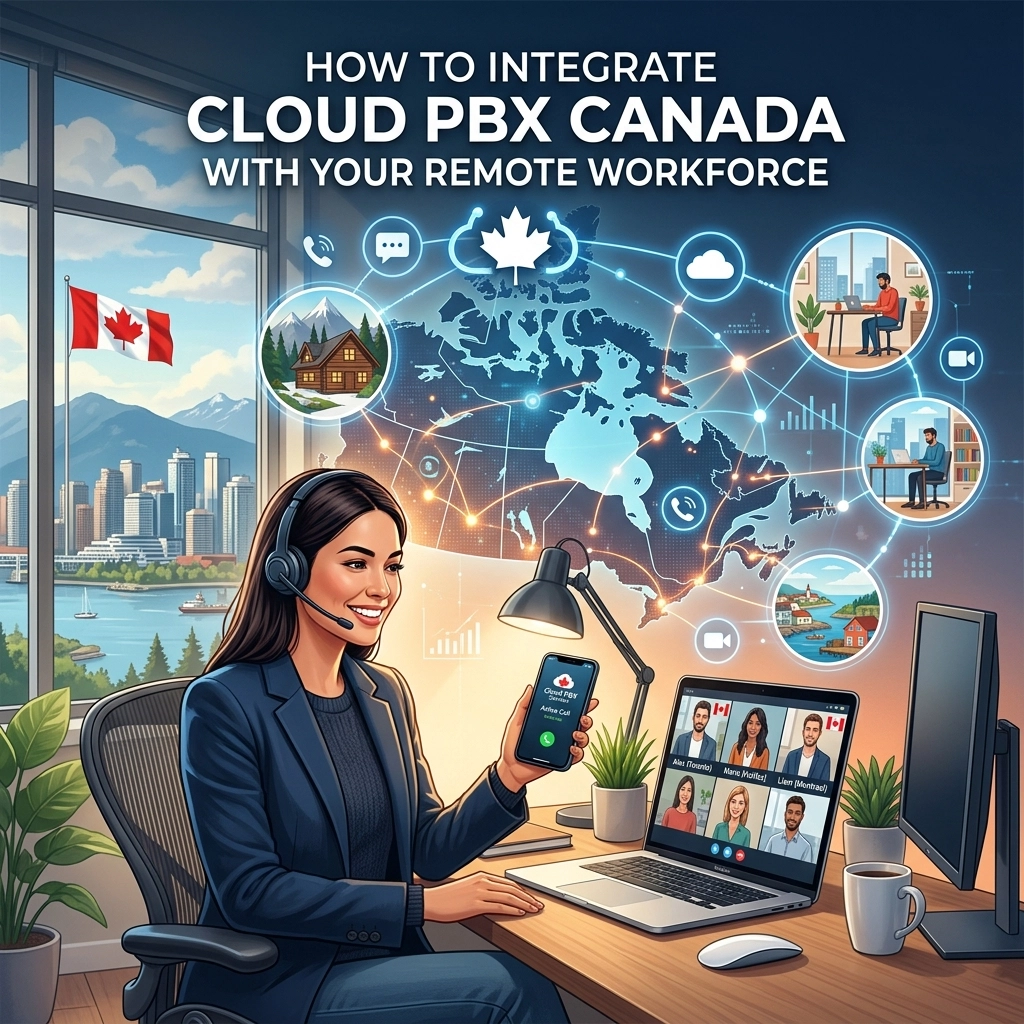
For decades, the call center was defined by rows of desks, tangles of wires, and massive server rooms humming in the back of the office. If you wanted to scale, you had to call a technician, buy more hardware, and wait weeks for installation. Today, that model is rapidly becoming a liability.
Modern Canadian businesses are moving toward the cloud to stay competitive. Whether you are a small startup or an established enterprise, a cloud call center solution offers flexibility that traditional systems simply cannot match. However, making the switch involves more than just picking a software provider.
If you are currently evaluating your options for business VoIP Canada, there are several critical factors to consider. From cost structures to AI integration, here are 10 things you should know before choosing a cloud call center solution.
1. How Does the Cost Model Differ from On-Premise?
The most immediate change you will notice is the shift from Capital Expenditure (CAPEX) to Operating Expenditure (OPEX). Traditional systems require a massive upfront investment in PBX hardware, handsets, and structured cabling services.
Cloud solutions operate on a subscription basis. You pay for what you use, usually on a per-user, per-month basis. This eliminates the need for expensive hardware maintenance and periodic "forklift upgrades" where you have to replace the entire system because it has become obsolete.
By choosing a cloud PBX Canada provider like Voiswitch, you can redirect your budget toward growing your team rather than maintaining aging server racks.
2. Can You Scale Up (and Down) Instantly?
One of the biggest frustrations with legacy hardware is its rigidity. If your business experiences seasonal spikes, such as a retail surge during the holidays, adding temporary agents used to be a logistical nightmare. You had to purchase new licenses and physically wire new desks.
With a cloud call center, scalability is a matter of a few clicks in an admin dashboard. You can add 50 agents for a busy month and scale back down the next. This "pay-as-you-grow" flexibility is essential for maintaining lean operations while ensuring you never miss a customer inquiry during peak times.

3. How Does the System Support Remote and Hybrid Work?
The traditional office-bound call center is a thing of the past. Today’s workforce demands flexibility. A cloud-based system allows your agents to work from anywhere with a stable internet connection.
Because the "brain" of the phone system lives in the cloud, agents can use laptop-based softphones, mobile apps, or IP phones at their home offices. This opens up your talent pool across the country. You are no longer limited to hiring people within a 30-minute commute of your physical office; you can hire the best talent for business VoIP Canada regardless of their postal code.
4. What is the Real Meaning of 99.9% Uptime?
Reliability is often a concern for businesses moving away from physical hardware. However, cloud systems are generally more resilient than on-premise setups.
A local system is a single point of failure. If your office loses power or the internet line is cut, your call center goes dark. Cloud providers use geographically redundant data centers. If one server goes down, another takes over instantly.
When reviewing providers, look for a Service Level Agreement (SLA) that guarantees high uptime. Most top-tier providers offer "four nines" (99.99%) or "five nines" (99.999%) reliability, ensuring your customer support remains reachable even if your local office faces technical issues.
5. Are AI and Automation Part of the Package?
The modern call center isn't just about voice calls; it’s about efficiency. Modern cloud solutions often come with built-in AI tools that were once only available to the largest corporations.
- Intelligent IVR: Advanced Interactive Voice Response systems use natural language processing to understand why a customer is calling and route them to the right person.
- Conversational AI: Chatbots can handle routine questions, such as "Where is my order?" without ever involving a human agent.
- Automated Transcription: AI can transcribe calls in real-time, allowing supervisors to scan conversations for keywords or sentiment without listening to the entire recording.

6. How Detailed are the Analytics and Reporting?
You cannot manage what you cannot measure. In an on-premise environment, getting real-time data often requires third-party software and complex integrations.
Cloud solutions provide performance dashboards that update in real-time. You can track:
- Average Handle Time (AHT)
- First Call Resolution (FCR)
- Agent Occupancy Rates
- Peak Call Volumes
This data allows managers to make informed decisions about staffing levels and training needs. If you notice a high abandonment rate at 2:00 PM every Tuesday, you know exactly when you need to add more "boots on the ground."
7. Does it Integrate with Your Existing Tools?
A call center should not exist in a silo. To provide truly exceptional service, your agents need context. When a customer calls, your team should see that customer’s entire history instantly.
Look for a provider that offers seamless integration with popular CRM platforms like Salesforce, HubSpot, or Zendesk. When the phone rings, a "screen pop" should appear, showing the agent the caller’s name, recent purchases, and open support tickets. This reduces the time spent asking "Can I have your account number?" and allows the agent to get straight to solving the problem.
You can explore compatible hardware and software options in the Voiswitch shop to see how different tools play together.
8. Is the Solution Truly Omnichannel?
Customers no longer just call. They email, they use web chat, and they reach out via social media. A "call center" that only handles voice is already behind the curve.
A cloud contact center solution unifies these channels into a single interface. An agent can respond to a Facebook message, then pivot to a phone call, and follow up with an email, all without leaving the same software window. This provides a consistent experience for the customer and prevents your agents from having to manage five different browser tabs.

9. What Tools are Available for Quality Assurance?
Training a remote or hybrid team requires specialized tools. How do you coach an agent when you aren't sitting next to them? Cloud platforms include "Listen, Whisper, and Barge" features:
- Listen: A supervisor monitors a live call without either party knowing.
- Whisper: A supervisor speaks to the agent to provide guidance, but the customer cannot hear them.
- Barge: The supervisor joins the call to take over if a situation becomes too difficult for the agent.
These tools, combined with automatic call recording and sentiment analysis, are vital for maintaining high service standards across a distributed team. If you ever run into technical hurdles while setting these up, Voiswitch offers comprehensive support to get your management team up to speed.
10. How is Security and Compliance Handled?
In the telecommunications world, security is non-negotiable. If you are handling sensitive customer data, you must ensure your cloud provider meets industry standards.
Cloud providers invest millions in security infrastructure: levels of protection that most small to medium businesses could never afford on their own. This includes end-to-end encryption, regular security patches, and compliance with standards like SOC2, HIPAA, or GDPR.
By outsourcing your call center infrastructure to a cloud provider, you are also outsourcing the massive responsibility of keeping that infrastructure secure from cyber threats.

Conclusion: Preparing Your Network for the Cloud
Switching to a cloud call center is a strategic move that can significantly lower costs and improve customer satisfaction. However, the software is only as good as the network it runs on.
Before you flip the switch, ensure your office infrastructure is ready. While cloud systems reduce the need for on-site servers, you still require high-quality structured cabling services and a robust internet connection to handle the voice traffic.
If you are ready to modernize your communications or need advice on the best cloud PBX Canada for your specific needs, the team at Voiswitch is here to help. Modernizing your business doesn't have to be a headache: it's about choosing the right partner to guide the way.
Ready to upgrade? Contact us today for a consultation on how to build a world-class call center in the cloud.