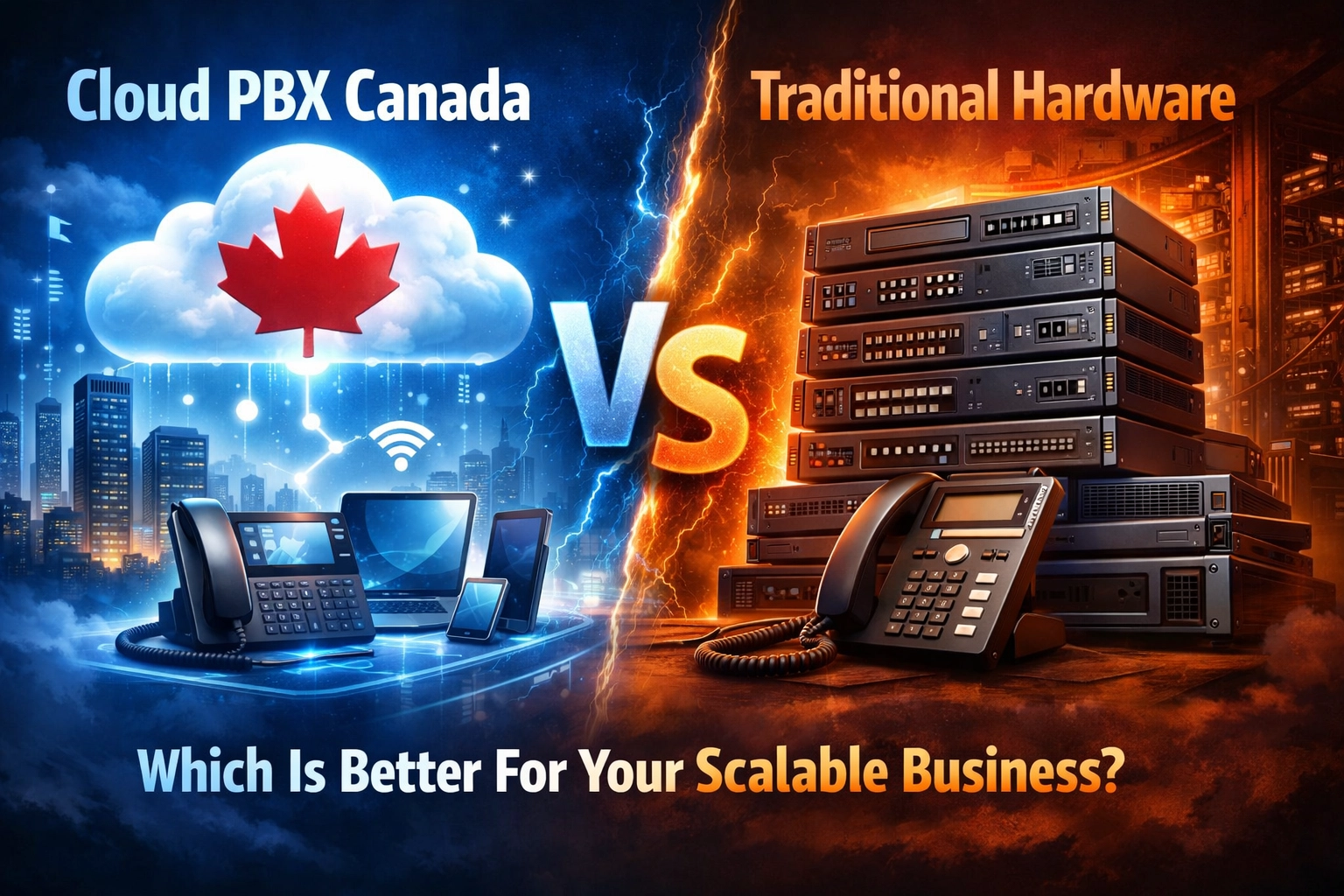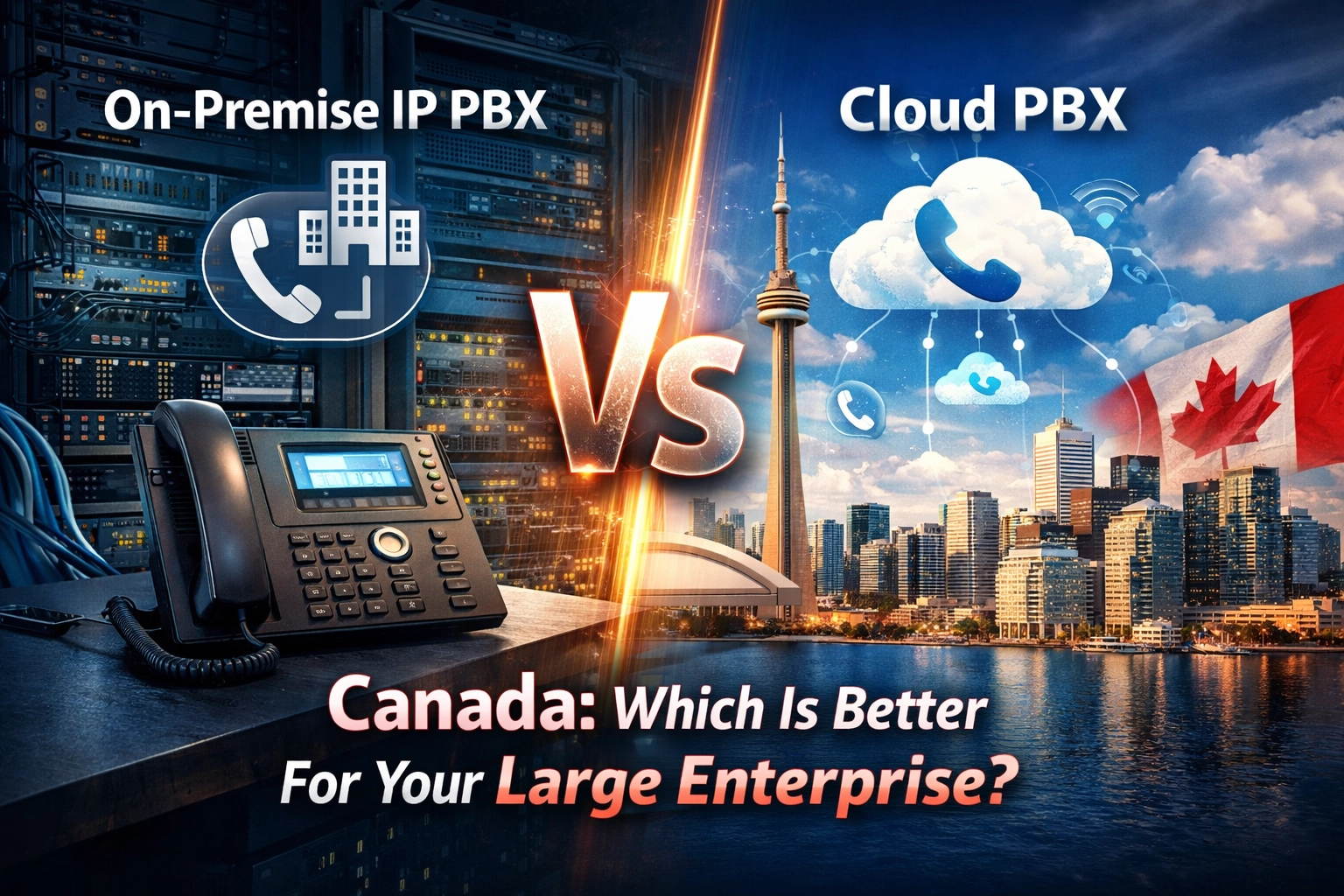
For large enterprises across Canada, the decision between an on-premise IP PBX and a cloud-hosted solution is no longer just a technical choice; it is a strategic financial and operational pivot. As legacy PSTN lines are phased out and digital transformation becomes a requirement rather than a luxury, the "standard" phone system has evolved.
In the Canadian landscape, where businesses often bridge massive geographic distances and balance remote workforces with centralized headquarters, the stakes for your communication infrastructure are high. Choosing the wrong system can lead to millions in lost productivity, security vulnerabilities, or escalating monthly costs.
This guide explores the critical differences between on-premise IP PBX and cloud PBX Canada solutions, specifically tailored for the needs of large-scale enterprises.
The Core Definitions: On-Premise vs. Cloud
Before diving into the ROI and technical comparisons, it is essential to define exactly what these two architectures represent in a modern Business VoIP Canada context.
What is an On-Premise IP PBX?
An on-premise system involves physical hardware (servers and gateways) installed within your company’s server room or data center. Your voice traffic travels over your internal Local Area Network (LAN). While the system uses IP (Internet Protocol) to move voice data, the "brains" of the operation reside entirely under your roof. You own the equipment, you manage the software updates, and you control the security protocols.
What is Cloud PBX?
Often referred to as Hosted PBX or UCaaS (Unified Communications as a Service), a cloud system places the PBX software on a provider's secure servers. Your business connects to these features via the internet. There is no heavy lifting in terms of hardware installation; your "system" is essentially a subscription that allows you to access enterprise-grade features through IP phones, desktop apps, or mobile devices.

Financial Impact: CAPEX vs. OPEX
For a large enterprise with hundreds or thousands of users, the financial model is often the deciding factor.
The Upfront Investment of On-Premise
On-premise systems require a significant initial Capital Expenditure (CAPEX). For an enterprise-scale deployment, this can easily exceed $10,000 to $50,000 depending on the complexity and hardware requirements. You are purchasing the servers, the licenses, and the physical infrastructure.
However, research indicates that on-premise IP PBX is typically more cost-effective in the long run for large organizations. Once the initial hardware is paid for, the ongoing costs are limited to SIP trunking fees and maintenance. For an organization with 500+ users, the "cost per user" often drops significantly below that of a cloud subscription over a five-to-ten-year lifecycle.
The Predictability of Cloud PBX
Cloud solutions operate on an Operational Expenditure (OPEX) model. There is little to no upfront cost for server hardware. Instead, you pay a monthly subscription fee per user.
For many Canadian enterprises, this predictability is attractive. It shifts the burden of hardware depreciation and replacement cycles to the provider. However, as your user count grows into the thousands, these monthly fees can accumulate. Cloud PBX is often the preferred choice for enterprises that prioritize cash flow and want to avoid the "sticker shock" of a massive hardware overhaul.
Control, Customization, and Security
Large enterprises often have complex requirements that go beyond simple dial tones. This is where the distinction between the two systems becomes most apparent.
Full Sovereignty with On-Premise
If your enterprise operates in a highly regulated industry: such as finance, healthcare, or government: control is paramount. An on-premise system allows your IT team to:
- Manage data residency (ensuring all voice data stays within Canadian borders).
- Implement custom security firewalls and encryption protocols.
- Deeply integrate the PBX with proprietary legacy software or specialized CRM systems.
Furthermore, on-premise systems ensure that internal calls remain available even if your external internet connection fails. This internal redundancy is a critical safety net for large-scale operations.
Managed Security in the Cloud
With cloud PBX Canada, the provider handles the security. For many businesses, this is an advantage. Top-tier providers invest millions in cybersecurity, offering 99.999% uptime guarantees and robust disaster recovery plans that would be too expensive for a single enterprise to build on its own. If your internal IT team is already stretched thin, offloading the security and maintenance of the phone system to a dedicated expert is a strategic move.

Scalability and the Modern Remote Workforce
The way we work has changed. Large Canadian enterprises now frequently support hybrid models, with employees spread from Halifax to Vancouver.
The Scalability Edge of Cloud
Cloud PBX is the undisputed winner for scalability. If you open a new branch office or hire 50 remote consultants, you can add them to your system in minutes through a web portal. There is no need to install new cards in a server or run complex wiring. Employees simply plug their IP phones into an internet connection or log into a mobile app, and they are part of the enterprise network.
Scaling On-Premise
Scaling an on-premise system requires more foresight. You must ensure your hardware has the "overhead" to support more users. If you reach the capacity of your server, you may need to purchase additional hardware modules. For enterprises with stable, predictable headcounts, this isn't an issue. For rapidly growing firms, it can become a bottleneck.
The Physical Layer: Structured Cabling Services
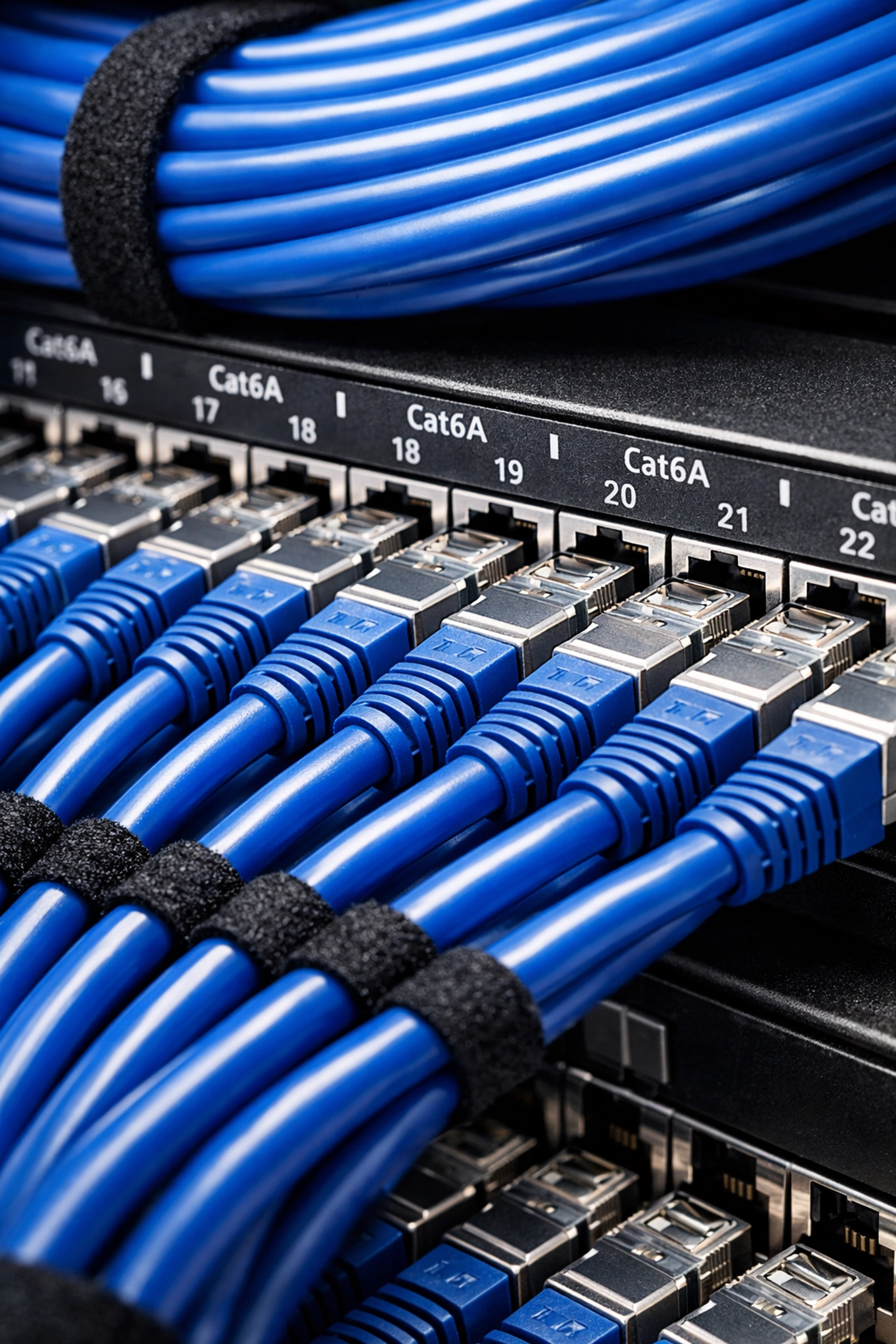
Regardless of whether you choose Cloud or On-Premise, the quality of your voice communication is only as good as the wires in your walls. Large enterprises often overlook the importance of structured cabling services.
A modern IP-based phone system requires high-quality Cat6 or Cat6a cabling to ensure low latency and zero packet loss. In an on-premise setup, your internal cabling handles 100% of the traffic. In a cloud setup, your cabling is the gateway to the internet. If your enterprise is moving to a new office or upgrading its system, investing in professional networking and cabling is the most important step in preventing dropped calls and "jitter."
Reliability and Disaster Recovery
In a large enterprise, a system outage isn't just an inconvenience: it's a liability.
- On-Premise Reliability: Your system is immune to local internet outages for internal communication. However, if a physical disaster (like a fire or flood) hits your server room, your entire communication hub could go dark unless you have a geographically redundant backup site.
- Cloud Reliability: Cloud systems are inherently redundant. If your office loses power, calls can automatically be routed to mobile apps or other branch offices. The "brains" of the system are safe in a high-security data center. The only single point of failure is your office's internet connection, which is why we always recommend a secondary, redundant business internet line for enterprise clients.
Summary: Which Should You Choose?
There is no "one-size-fits-all" answer, but the choice usually aligns with your enterprise’s internal resources and long-term goals.
Choose On-Premise IP PBX if:
- You have a large, stable user count (250+).
- You have a dedicated in-house IT team to manage the system.
- You prefer CAPEX and want the lowest possible long-term Total Cost of Ownership (TCO).
- You require absolute control over your security and data residency.
- You have already invested in high-quality structured cabling services.
Choose Cloud PBX if:
- You have a highly distributed or remote workforce.
- You prioritize flexibility and the ability to scale up or down instantly.
- You prefer a predictable monthly OPEX model.
- You want to offload maintenance and security to a third-party expert.
- You need built-in disaster recovery without building a second data center.
Partnering for Success
Choosing between on-premise and cloud is a major milestone for any Canadian enterprise. At Voiswitch, we understand the nuances of the Canadian telecommunications market. We don't just provide a service; we provide the architectural expertise to ensure your communication system supports your business growth rather than hindering it.
Whether you are looking for the robust control of an on-premise system or the agile power of cloud PBX Canada, our team can guide you through the transition, from initial audit to final installation and cabling.
Ready to modernize your enterprise communication? Contact our experts today for a comprehensive consultation tailored to your business needs.