For decades, Canadian businesses relied on the traditional Public Switched Telephone Network (PSTN) to keep their operations running. Copper wires and PRI (Primary Rate Interface) lines were the gold standard. However, as the digital landscape shifts, these legacy systems are becoming increasingly expensive to maintain and difficult to scale.
If you are looking to modernize your communication infrastructure, SIP Trunking is the bridge that connects your older hardware to the modern world of IP communications. But upgrading isn't just about flipping a switch; it requires a strategic understanding of how voice-over-internet technology works within the Canadian context.
At Voiswitch, we help businesses navigate these transitions every day. Before you make the leap to SIP trunks, here are ten essential things you need to know.
1. SIP Trunking Replaces Your Physical Phone Lines
In the past, if you wanted ten simultaneous phone calls, you needed ten physical pairs of copper wires coming into your building. SIP (Session Initiation Protocol) Trunking changes this by using your internet connection to carry voice signals.
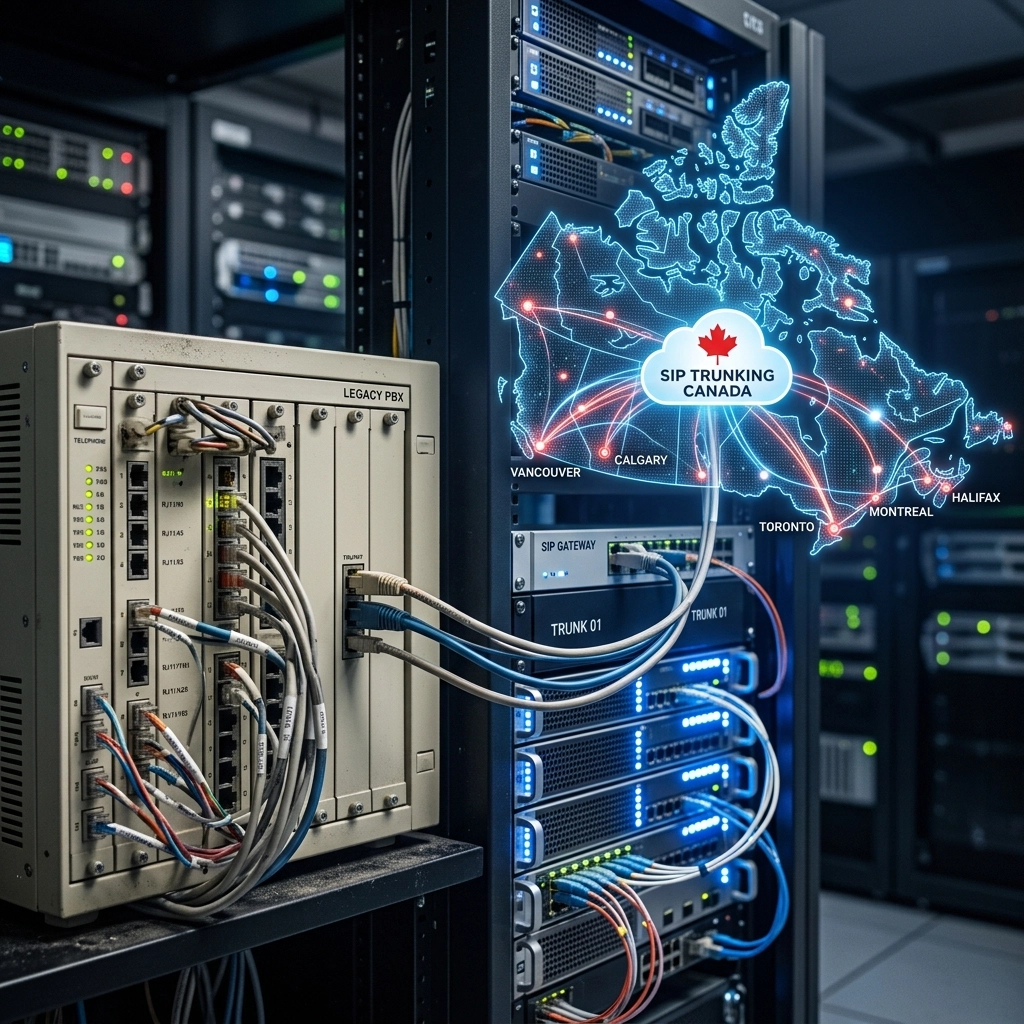
Essentially, a SIP trunk is a "virtual" phone line. It connects your on-premise PBX (Private Branch Exchange) to the rest of the world via the internet. This transition means you no longer need to pay for heavy hardware installations from the "big telcos" just to add a new line. Your calling infrastructure becomes a software-driven service rather than a hardware-bound liability.
2. The Potential for Significant Cost Reduction
One of the primary drivers for business VoIP Canada adoption is the bottom line. Traditional landlines often come with high monthly rental fees, "system access" charges, and expensive long-distance rates.
SIP trunking often eliminates these redundant costs. Because the service is delivered over the internet, many providers offer:
- Lower monthly recurring costs per channel.
- Significantly reduced long-distance rates (often as low as fractions of a cent per minute).
- Elimination of physical maintenance fees for copper lines.
By consolidating your voice and data onto a single network, you simplify your billing and reduce your overhead.

3. Your Internet Reliability is Non-Negotiable
Since SIP trunking relies entirely on your data connection, your internet is now your dial tone. If your internet goes down, your phones go down: unless you have a plan in place.
Before upgrading, you must evaluate your current business internet capacity. Voice traffic doesn't require a massive amount of bandwidth, but it does require "clean" bandwidth. High latency or jitter on a connection might not affect your email, but it will make a phone call sound robotic or choppy. Many Canadian businesses choose to implement a dedicated fiber connection or a managed SD-WAN solution to prioritize voice traffic over standard web browsing.
4. Scalability is Instant and Seamless
In the legacy world, adding more capacity often meant waiting weeks for a technician to arrive and install new hardware. With SIP trunking, scaling is nearly instantaneous.
If your business experiences seasonal spikes: for example, a retail operation during the holidays: you can increase your trunk capacity in minutes through a digital dashboard. When the rush is over, you can scale back down. This "pay-as-you-grow" model ensures you are never paying for idle capacity that you don't need.
5. Compatibility with Existing PBX Systems
A common misconception is that you have to throw away your existing phone system to use SIP. This isn't necessarily true. While many businesses choose to move to a full cloud PBX Canada solution, others prefer to keep their on-premise hardware.
If your current PBX is "IP-ready," connecting a SIP trunk is straightforward. If you have an older analog system, you can use a VoIP Gateway (an ATA) to "translate" the SIP signal into something your old hardware understands. However, it is vital to audit your hardware first to ensure it can handle the required authentication and security protocols.

6. Access to Advanced Features
SIP trunking isn't just about making calls; it’s about unlocking features that were previously reserved for enterprise-level corporations. When you move to a SIP-based system, you gain access to:
- Voicemail-to-Email: Receive your messages as audio files in your inbox.
- HD Voice: Superior audio clarity compared to traditional analog lines.
- Mobile Integration: Use your business number on your smartphone via an app.
- Call Recording: Easily log calls for training or compliance purposes.
These features help small and medium-sized Canadian businesses project a more professional image while streamlining internal workflows.
7. Business Continuity and Disaster Recovery
What happens if a construction crew accidentally cuts the fiber line outside your office? In the old days, your business would be unreachable. SIP trunking offers much more robust disaster recovery options.
Most SIP providers offer "Failover Routing." If the system detects that your primary office PBX is unreachable, it can automatically reroute incoming calls to a backup location, a mobile device, or an external answering service. This ensures that your customers can always reach you, regardless of local outages.
8. Security Requirements (TLS and sRTP)
Because SIP traffic travels over the internet, it is theoretically vulnerable to intercept or "toll fraud" if not properly secured. When choosing a provider, you must ensure they support modern security standards.
Look for providers that offer:
- TLS (Transport Layer Security): This encrypts the signaling of the call so hackers can’t see who you are calling.
- sRTP (Secure Real-time Transport Protocol): This encrypts the actual audio of the call.
In addition to encryption, your internal structured cabling services and network configuration should include a properly configured firewall to prevent unauthorized access to your voice gateway.

9. Understanding the Different Pricing Models
Not all SIP trunks are priced the same. Depending on your call volume, one model may be significantly better for your budget than another:
- Unlimited Channels: You pay a flat monthly fee for a set number of concurrent calls. This is great for high-volume call centers.
- Pay-As-You-Go: You pay a very low monthly fee for the "trunk" itself, and then a per-minute rate for every call. This is ideal for businesses with low call volumes or those who primarily receive calls.
- Bundled Minutes: A hybrid approach where you get a certain number of minutes included in your monthly trunk price.
Take the time to analyze your past three months of phone bills to determine which model fits your actual usage patterns.
10. Navigating the Canadian Regulatory Landscape
Operating in Canada comes with specific regulatory requirements that international providers might overlook. Two major factors are E911 and local number portability.
E911 (Enhanced 911): Because a SIP trunk isn't tied to a physical location, you must manually register your address with your provider. If someone in your office dials 911, the emergency operator needs to know exactly where that call is coming from. We recommend reading our guide on 911 explained to understand your responsibilities.
Local Presence: Ensure your provider can offer DID (Direct Inward Dialing) numbers in your specific Canadian area codes. Some international providers have limited "coverage" in rural parts of Canada or specific provinces, which could prevent you from porting your existing local numbers over to the new system.
The Importance of Professional Setup
While SIP trunking offers incredible flexibility, the "DIY" approach can often lead to dropped calls, poor audio quality, or security vulnerabilities. Successful implementation often requires a holistic look at your office infrastructure.
This includes:
- Network Assessment: Ensuring your routers and switches are configured for Quality of Service (QoS).
- Cabling: Modern VoIP systems perform best on high-quality Cat6 structured cabling.
- Hardware Selection: Choosing the right IP phones or gateways from a reputable shop.

Conclusion: Is SIP Trunking Right for You?
The transition to SIP trunking is no longer a luxury for Canadian businesses: it is a necessity for those looking to stay competitive and reduce costs. By moving away from legacy landlines, you gain a level of flexibility, scalability, and disaster recovery that traditional systems simply cannot match.
However, the key to a successful upgrade is choosing the right partner. At Voiswitch, we specialize in helping Canadian businesses navigate the complexities of business VoIP Canada and cloud PBX setups. Whether you are looking for a simple trunking solution for your existing PBX or a complete overhaul of your communications, we are here to provide the expert guidance you need.
Ready to modernize your business communications? Contact us today to learn how we can tailor a SIP solution to your specific needs.