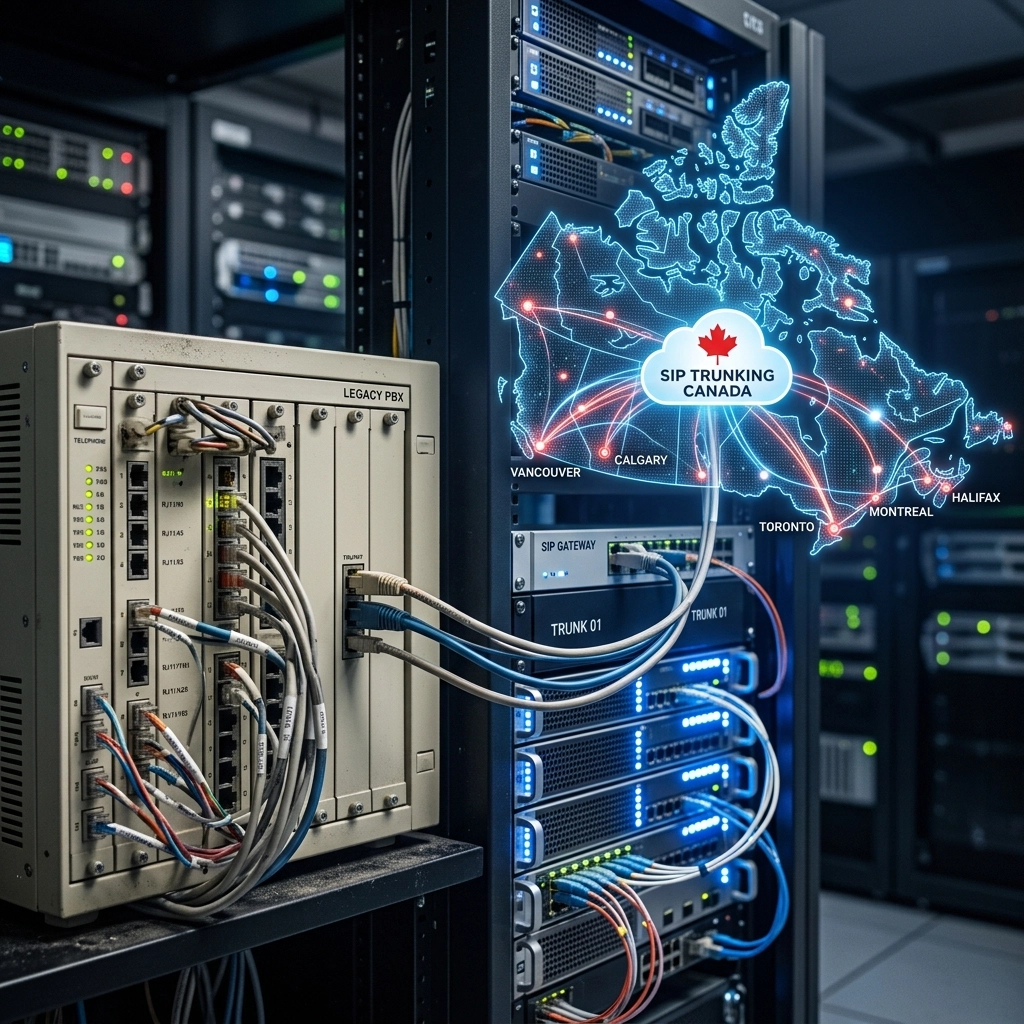
In the current Canadian business landscape, the definition of a "modern office" has shifted. It is no longer just a physical space with desks and chairs; it is a high-speed hub of digital activity where communication, data transfer, and security must function with 99.9% reliability. Whether your team is operating out of a high-rise in Toronto or a distributed office in Vancouver, the backbone of your success is your professional networking solution.
Many business owners treat their office network like a utility: something they only think about when it breaks. However, legacy systems and "good enough" setups often lead to dropped calls, slow file transfers, and security vulnerabilities that can halt productivity. This guide will walk you through the essential components of professional networking, from physical cabling to cloud-based communication, ensuring your business is built on a foundation of growth.
What is Structured Cabling and Why Does it Matter?
Before you can implement the latest business VoIP Canada has to offer, you must look at the physical layer of your network. Structured cabling is the comprehensive system of cabling and associated hardware which provides the physical infrastructure for your telecommunications.
Many older offices suffer from "spaghetti cabling": a disorganized mess of wires behind server racks. This isn't just an eyesore; it’s a liability. When a connection fails, troubleshooting a disorganized system takes hours longer than it should, leading to unnecessary downtime.
The Benefits of Professional Structured Cabling Services
- Scalability: A professional installation allows you to add new workstations or devices easily without rewiring the entire office.
- Reduced Downtime: Organized cables are easier to trace and test, meaning technical issues are resolved in minutes rather than hours.
- Future-Proofing: Using high-quality standards like Cat6 or Cat6a ensures your infrastructure can handle the increasing bandwidth demands of 4K video conferencing and massive data backups.
Investing in professional structured cabling services is the first step in moving away from the limitations of legacy setups toward a modern, reliable environment.

Transitioning from Traditional Landlines to Cloud PBX
For decades, Canadian businesses relied on traditional PSTN (Public Switched Telephone Network) lines. These systems were expensive to maintain, difficult to move, and lacked the features required by a mobile workforce. The solution for the modern office is cloud PBX Canada.
What is Cloud PBX?
A Cloud PBX (Private Branch Exchange) is a business phone system that is hosted entirely on the internet. Instead of having a bulky "phone closet" in your office, your service provider manages the hardware and software in secure, off-site data centers. This transition solves several common business problems:
- The Cost Problem: Traditional systems require heavy upfront capital for hardware. Cloud systems operate on a manageable monthly subscription model.
- The Mobility Problem: With cloud PBX, your employees can take their office extension anywhere via a mobile app or laptop.
- The Feature Problem: Advanced features like auto-attendants, call recording, and voicemail-to-email are often included without the need for expensive add-ons.
By choosing a provider that specializes in cloud PBX Canada, you ensure that your communication system is optimized for local latency and compliance requirements.
Enhancing Communication with Business VoIP Canada
While Cloud PBX refers to the system management, VoIP (Voice over Internet Protocol) is the technology that actually carries your voice over the internet. When people search for business VoIP Canada, they are looking for a way to unify their communications while slashing their monthly bills.
Why VoIP is Essential for Modern Productivity
Legacy phone systems are static. If you leave your desk, you miss the call. In contrast, modern VoIP solutions offer "Presence" features, allowing teammates to see if you are available, on a call, or away. This streamlines internal communication and improves the customer experience by ensuring callers are always routed to an available representative.
Furthermore, integrating your phone system with your CRM (Customer Relationship Management) software allows for "screen pops" where a client’s information appears automatically when they call. This level of professional networking is what separates a modern enterprise from a struggling small business.

Hardware Essentials: Choosing the Right IP Phones
Your network is only as good as the endpoints your team uses. While many employees use softphones (apps on their computers), many still prefer the reliability and tactile feel of a physical desk phone. When browsing the Voiswitch shop, you’ll find that IP phones have come a long way.
What to Look for in Modern IP Phones:
- HD Voice: Crystal clear audio is a must to avoid "What did you say?" moments during important client calls.
- PoE Support: Power over Ethernet (PoE) allows your phones to draw power directly from the network cable, eliminating the need for bulky power bricks at every desk.
- Expansion Modules: For receptionists or office managers, sidecars (expansion modules) allow for one-touch transfers to dozens of different extensions.
- WiFi Capability: In areas where running a cable is impossible, high-end IP phones can connect via professional-grade WiFi.
You can explore a variety of hardware options tailored for the Canadian market at the Voiswitch hardware store.
The Importance of Business-Grade Internet
You cannot run a professional VoIP system or a Cloud PBX on a residential-grade internet connection. Modern offices require business internet that offers symmetrical speeds (where upload is as fast as download) and a Service Level Agreement (SLA) that guarantees uptime.
Professional networking solutions often include a "Failover" strategy. This means having a secondary internet connection (perhaps a 5G or LTE backup) that kicks in automatically if your primary fiber line is cut. For a modern office, five minutes of internet downtime can mean thousands of dollars in lost revenue.
Security and Access Control
Professional networking isn't just about data; it’s about physical security. A modern office uses its network to manage who enters the building. Access control systems allow you to replace traditional keys with keycards, fobs, or even smartphone apps.
When these systems are integrated into your network, you can:
- Monitor Access Remotely: See who is in the building from your smartphone.
- Revoke Access Instantly: If an employee leaves the company, you can deactivate their digital key with one click, rather than changing every lock in the building.
- Integrate with Surveillance: Link your access points with security cameras so that every time a door is opened, a short video clip is saved.

How to Get Started: The Problem vs. Solution Arc
If your current office feels like it's stuck in 2010: slow internet, messy cables, and a phone system that requires a technician to visit just to change a name: it's time for an upgrade.
The Problem: Legacy systems are rigid, expensive to maintain, and create "silos" where information doesn't flow easily.
The Solution: A unified networking approach. By combining structured cabling services with a robust cloud PBX, you create a seamless environment where technology supports your business goals rather than hindering them.
Step-by-Step Implementation:
- Audit Your Current State: Check your cable management and internet speeds.
- Consult the Experts: Reach out to a professional who understands the unique needs of business VoIP Canada.
- Prioritize the Backbone: Never put new software on old, failing cables. Fix the infrastructure first.
- Train Your Team: Ensure your staff knows how to use the advanced features of their new system to maximize ROI.
Conclusion: Flexibility and Reliability
Success in the modern office is defined by your ability to stay connected. By investing in professional networking solutions, you remove the "headaches" of technical failures and the "liabilities" of outdated security. Whether you are looking for SIP trunks to modernize your existing on-site PBX or a full cloud migration, the goal remains the same: a system that works so well you forget it's even there.
At Voiswitch, we specialize in helping Canadian businesses navigate these technical waters. From the initial cable pull to the final configuration of your cloud-based call flow, we provide the expertise needed to help you succeed. Ready to modernize? Learn more about us or head over to our FAQ to see how we can transform your office infrastructure today.