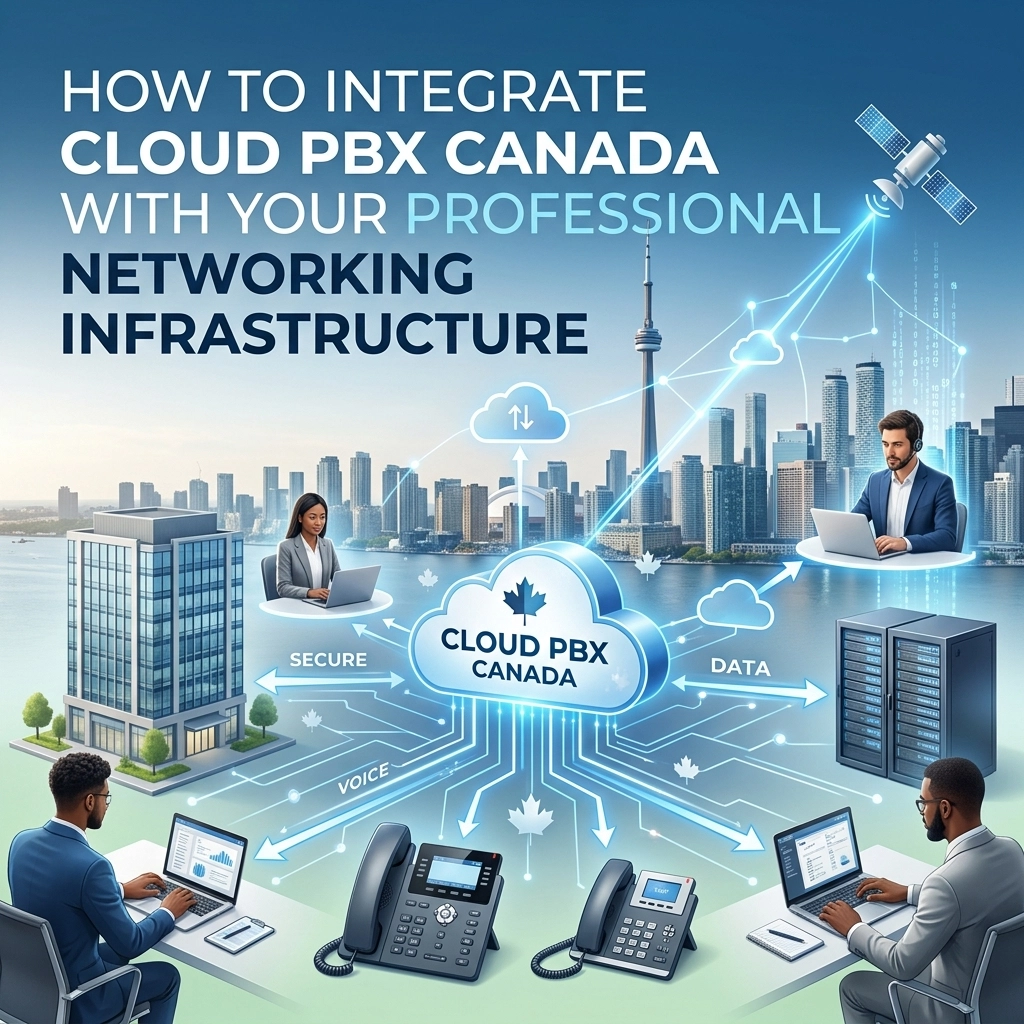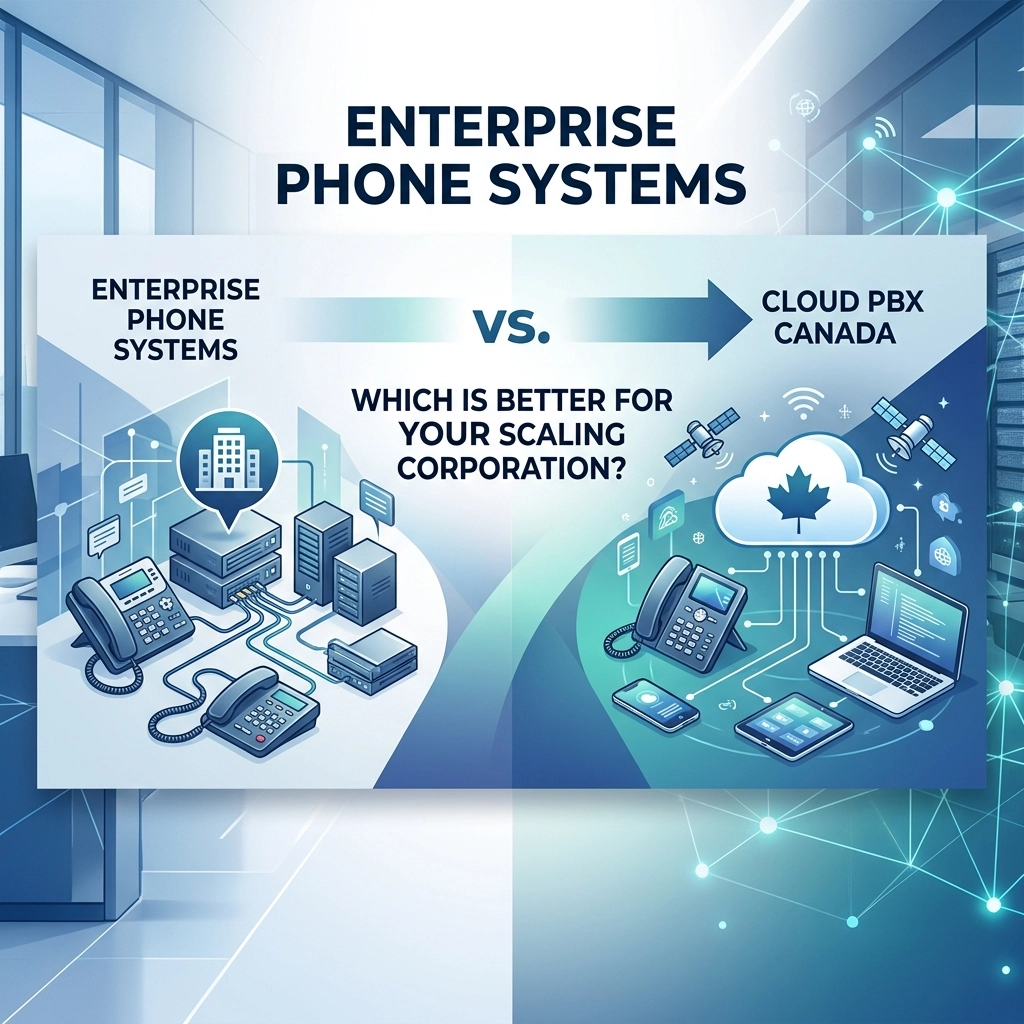
For decades, the standard for any large-scale Canadian corporation was a dedicated server room humming with the sounds of a private branch exchange (PBX). This hardware was the heart of corporate communication, connecting hundreds of desk phones through a complex web of internal wiring. However, as businesses in hubs like Toronto, Vancouver, and Montreal move toward rapid expansion and hybrid work models, the traditional "big box in the closet" is facing a significant challenger.
The debate between Enterprise On-Premises Phone Systems and Cloud PBX Canada is no longer just a technical one; it is a strategic financial decision. For a scaling corporation, your communication infrastructure can either be a fuel for growth or a restrictive anchor. Understanding the nuances of these two systems is essential for any BSS (Business Support System) professional or IT decision-maker looking to future-proof their organization.
What Exactly Is an On-Premises Enterprise Phone System?
An on-premises enterprise phone system is a physical piece of hardware installed locally within your office building. It utilizes your internal structured cabling services to connect extensions and requires a direct connection to the Public Switched Telephone Network (PSTN) or through SIP trunks.
In this model, your corporation owns the equipment. This provides a high level of control over your security protocols and internal data. Traditionally, large enterprises preferred this because it kept voice traffic entirely within their own firewall. However, this control comes with the responsibility of maintenance, hardware upgrades, and the need for dedicated IT staff to manage the system.
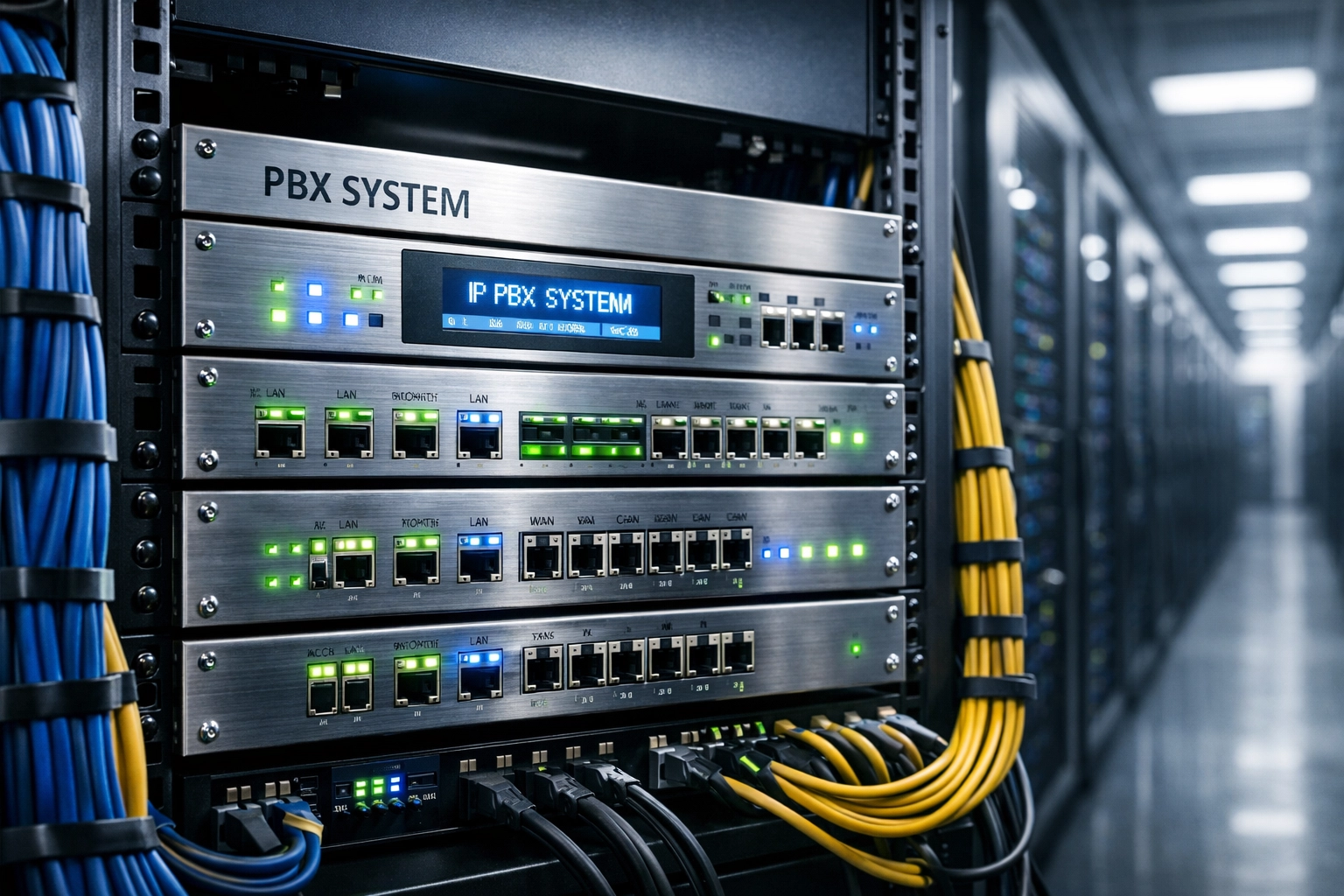
What Makes Cloud PBX Canada the Modern Standard?
Cloud PBX, often referred to as hosted VoIP, shifts the entire infrastructure to the internet. Instead of a physical server in your office, the "brain" of your phone system lives in a secure, redundant data center maintained by your service provider.
For businesses looking for business voip canada, the cloud model offers a "Communication as a Service" (CaaS) approach. You no longer buy "lines" in the traditional sense; you subscribe to seats or users. The system is accessed via the internet, meaning a desk phone in a Calgary satellite office works exactly the same as one in the Montreal headquarters, all connected to the same virtual system.
Why Scalability Is the Deciding Factor for Corporations
The primary challenge for a scaling corporation is unpredictability. If your five-year plan involves doubling your headcount, an on-premises system presents several hurdles.
1. Hardware Limitations
Traditional PBX systems have a fixed capacity. Once you fill all the physical ports on your hardware cards, you must purchase new expansion modules. If the system itself is at capacity, you may be forced into an "all or nothing" upgrade of the entire core server just to add a few dozen more employees.
2. Deployment Speed
With cloud pbx canada, scaling is nearly instantaneous. Adding 50 new users doesn't require a technician to visit your office to install hardware. You simply log into a web portal, provision the new users, and ship pre-configured IP phones to their location. In a competitive Canadian market, the ability to get a new department up and running in 24 hours rather than three weeks is a massive operational advantage.
3. Geographic Flexibility
As corporations scale, they often move beyond a single central office. On-premises systems require complex VPNs or expensive dedicated circuits to connect multiple locations. Cloud systems are inherently location-agnostic. Whether your team is working from a skyscraper in Toronto or a home office in Halifax, they are part of the same unified system.

Comparing the Total Cost of Ownership (TCO)
When evaluating "better," we must look at the financial impact over a 5-to-10-year period. The cost structures of these two systems are fundamentally different.
On-Premises (CAPEX Model):
- Upfront Costs: Very high. You are purchasing servers, licenses, and handsets all at once.
- Maintenance: You are responsible for the environment (cooling, power) and the technical upkeep.
- Upgrades: When the hardware becomes "end of life," you face another massive capital expenditure to replace it.
Cloud PBX (OPEX Model):
- Upfront Costs: Low. Usually limited to the cost of the IP phones and a minimal setup fee.
- Predictability: You pay a monthly fee per user. This makes budgeting for growth simple; if you hire 10 people, you know exactly how much your bill will increase.
- Automatic Updates: The service provider manages all software updates and security patches in the background, ensuring you are always on the latest version without additional cost.
For a scaling corporation, the OPEX model is often preferred because it preserves capital for core business activities: like R&D or marketing: rather than sinking it into rapidly depreciating telecommunications hardware.
The Role of Structured Cabling Services in Your Expansion
Regardless of which system you choose, the physical layer of your office remains critical. Many corporations make the mistake of assuming that "cloud" means "wireless."
While VoIP can run over Wi-Fi, a professional enterprise environment requires a robust physical backbone. Structured cabling services ensure that your office has the Cat6 or Fiber infrastructure needed to support high-definition voice traffic without jitter or dropped calls. If you are scaling into a new office space, the quality of your cabling will dictate the quality of your communication, whether your PBX is in the closet or in the cloud.

Business Continuity and Disaster Recovery
In a traditional setup, if a backhoe cuts the physical phone lines outside your building or if your office loses power, your phones go dark. For a corporation, even an hour of downtime can result in thousands of dollars in lost revenue and damaged reputation.
Cloud PBX offers built-in disaster recovery. Because the system lives in the cloud, an office-level outage doesn't kill the phone system. Calls can be automatically rerouted to mobile apps or other office locations instantly. This level of redundancy is often prohibitively expensive to build for a private on-premises system but comes standard with most business voip canada packages.
Which Is Better for Your Scaling Corporation?
To make the final decision, ask your leadership team the following three questions:
- Where will our employees be in three years? If the answer includes remote work, hybrid models, or new satellite offices, Cloud PBX is the clear winner.
- How do we prefer to spend our budget? If you prefer predictable monthly operational costs, choose Cloud. If you have a surplus of capital and want to own the asset, On-Premises might be considered.
- Do we have the IT resources to manage hardware? If your IT team is already stretched thin, offloading the maintenance of a phone system to a provider like Voiswitch can free them up for higher-value projects.

Making the Transition with Voiswitch
For most scaling corporations in the current Canadian landscape, Cloud PBX Canada provides the flexibility and cost-efficiency required to stay competitive. It removes the "headaches" of legacy hardware while providing the "enterprise-grade" features: like call queuing, CRM integration, and advanced analytics: that modern businesses demand.
At Voiswitch, we specialize in helping businesses navigate this transition. Whether you are looking to replace an aging IP PBX or you need a complete structured cabling overhaul for a new facility, our team provides the expert guidance needed to ensure your communication system scales as fast as your business does.
Scaling a corporation is difficult enough; your phone system should be the easiest part of that growth. By choosing a cloud-forward approach, you ensure that your team remains connected, your costs remain predictable, and your infrastructure remains ready for whatever the future of the Canadian market holds.
To learn more about how we can help your organization scale, visit our Cloud PBX page or contact us today for a consultation.