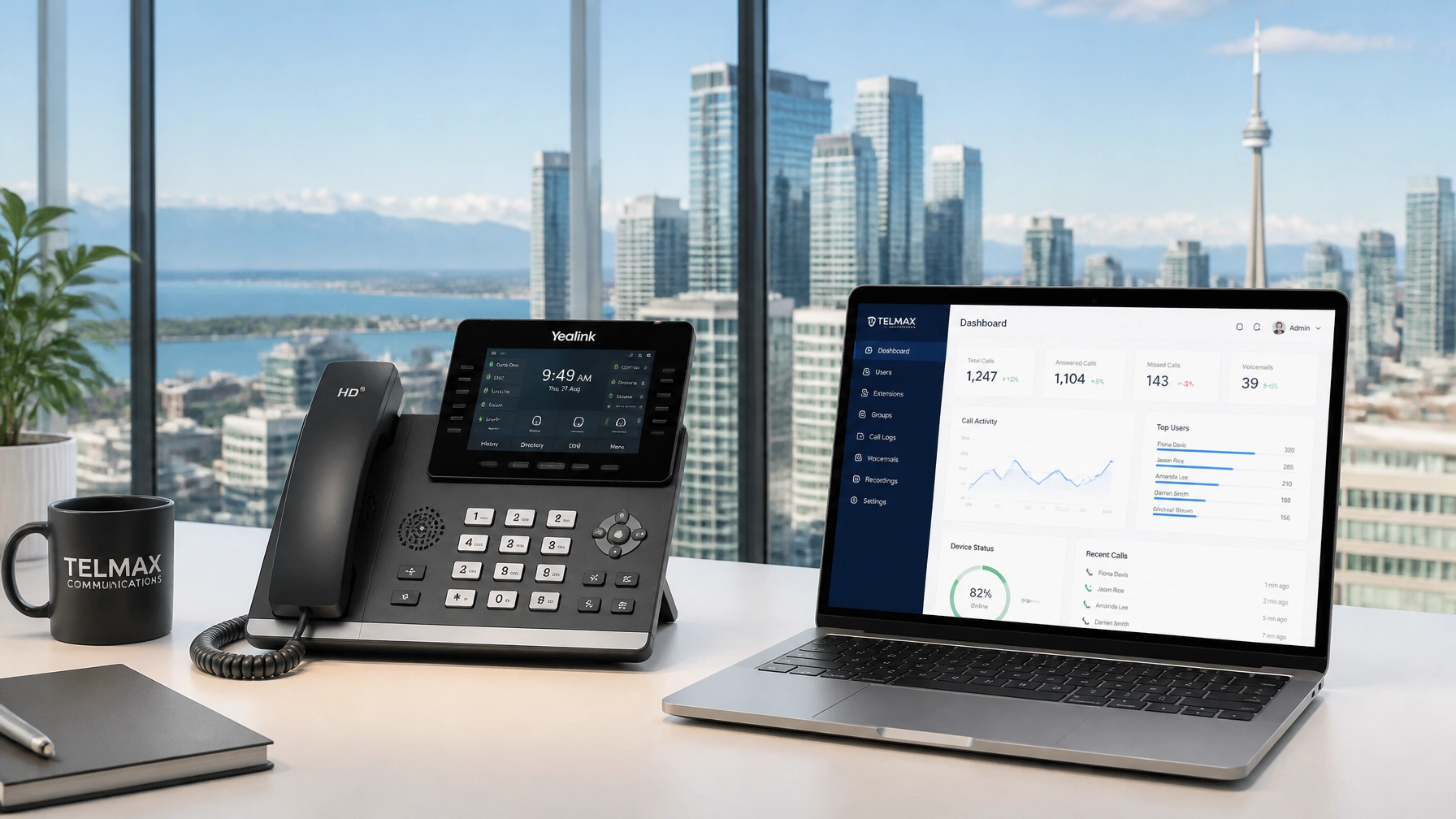
For decades, the "telephone room" was a staple of the Canadian office. It was a cramped closet filled with tangled copper wires, heavy hardware boxes, and a cooling fan that never seemed to stop humming. When you wanted to add a new employee, you had to call a technician, wait three days, and pay a hefty service fee just to punch down a new line.
That era is officially over.
As Canadian businesses move toward hybrid work models and digital-first operations, the traditional on-premise phone system has become a liability. It’s expensive to maintain, impossible to scale quickly, and tethered to a physical desk. Enter Cloud PBX Canada: the modern solution that is transforming how businesses from Halifax to Vancouver communicate.
In this guide, we’ll break down exactly what hosted PBX is, why it matters for your business, and how you can master the transition to a more flexible, cost-effective communication strategy.
What exactly is a Cloud PBX?
To understand Cloud PBX, you first need to know what a PBX (Private Branch Exchange) does. Historically, a PBX was the "brain" of your office phone system. It handled internal switching, voicemail, and call routing.
A Cloud PBX (also known as Hosted PBX) takes that entire "brain" and moves it to the internet. Instead of owning and maintaining a physical server in your office, you access your phone system via the cloud. Your service provider: like Voiswitch: manages the hardware, software updates, and security in a secure data center.
Think of it like the difference between owning a DVD collection and having a Netflix subscription. With Netflix (the cloud), you don't need the shelf space or the player; you just need an internet connection to access everything you want.
How does the technology work?
The magic behind a Cloud PBX is VoIP (Voice over Internet Protocol). Instead of sending voice signals over aging copper wires, your voice is converted into digital data packets and sent over your Business Internet connection.

When someone dials your business number, the call hits your provider's cloud platform. The system then instantly routes that call based on your specific rules: perhaps it rings your desk phone first, then your mobile app, and finally goes to your email as a voicemail transcript if you don't answer.
This happens in milliseconds, ensuring that business VoIP Canada users experience the same (or better) call quality as traditional landlines.
Why are Canadian businesses making the switch?
The shift to Cloud PBX isn't just a trend; it's a strategic move to solve several common business headaches.
1. Drastic Cost Savings
Traditional systems require a massive upfront investment in hardware, plus ongoing maintenance contracts. With a hosted system, your capital expenditure (CapEx) drops to nearly zero. You typically pay a predictable monthly fee per user, which includes your hosting, support, and long-distance minutes.
2. Ultimate Mobility
In a post-pandemic world, your team isn't always in the office. A Cloud PBX allows employees to take their business extension with them. Whether they are using a professional IP phone at their desk, a laptop in a coffee shop, or a smartphone app on the road, they remain connected to the office ecosystem.
3. Scalability on Demand
Are you hiring five new sales reps next month? In the old days, that meant ordering new cards for your PBX and waiting for a tech. With a cloud system, you can add new users in minutes through an online portal. It grows exactly at the pace of your business.
4. Enterprise-Level Features for Everyone
Small family-run businesses can now sound like Fortune 500 companies. Features that used to cost thousands: like auto-attendants (the "Press 1 for Sales" menus), call queuing, and CRM integration: are now standard inclusions.
Key features you should master
If you’re moving to a Cloud PBX Canada solution, you shouldn't just use it to make calls. You should leverage its full feature set to improve efficiency.
- Auto-Attendant: A virtual receptionist that routes calls to the right department, ensuring no call goes unanswered.
- Voicemail-to-Email: Receive your voicemails as audio files or text transcripts directly in your inbox.
- Ring Groups: Ring multiple phones simultaneously (e.g., all support staff) so the first available person can pick up.
- Mobile App Integration: Use your business caller ID on your personal smartphone, keeping your private number private.
- Call Analytics: Track peak call times, average wait times, and missed calls to optimize your staffing.

The foundation: Why cabling and networking matter
A common mistake business owners make is assuming that because the PBX is "in the cloud," the physical office no longer matters. In reality, your cloud system is only as good as the local network it runs on.
This is where structured cabling services become vital. To ensure crystal-clear call quality without drops or jitter, your office needs:
- High-Quality Wiring: Category 6 (Cat6) cabling is the gold standard for modern VoIP environments.
- PoE Switches: Power over Ethernet (PoE) allows your IP phones to get power and data through a single cable, reducing clutter.
- Managed Networking: Professional routers that prioritize voice traffic (Quality of Service or QoS) over less urgent data like software updates or guest Wi-Fi.
If you are renovating a new office or moving locations, investing in professional networking and structured cabling is the best way to future-proof your investment.

Is Cloud PBX right for every business?
While hosted systems are ideal for most, some organizations with significant existing investments in on-premise hardware might prefer a middle-ground solution.
If you have a high-end physical PBX that you aren't ready to scrap, SIP Trunks are the answer. SIP Trunking allows you to keep your on-premise hardware but connect it to the internet for cheaper calling rates and better flexibility. However, for most small to mid-sized Canadian businesses, a fully hosted Cloud PBX is the simpler and more powerful choice.
How to choose a provider in Canada
Not all business VoIP Canada providers are created equal. When evaluating your options, look for these three "Must-Haves":
- Local Support: If your phones go down, you don't want to be stuck in a support queue for a company based in a different time zone. Voiswitch offers 24/7 award-winning support right here in Canada.
- E911 Compliance: Emergency services work differently with VoIP. Ensure your provider has a robust 911 process that accurately links your physical address to your digital lines.
- End-to-End Solutions: Some companies just sell you the software and leave you to figure out the rest. Look for a partner that handles everything from structured cabling and internet to hardware sales and installation.

Frequently Asked Questions
Can I keep my current phone numbers?
Yes. In Canada, "number porting" allows you to move your existing local and toll-free numbers from your old carrier to your new Cloud PBX provider.
Do I need a special phone for Cloud PBX?
You have options. You can use specialized IP phones (like those from Yealink or Polycom), but you can also use "softphones": which are apps that run on your computer or smartphone.
What happens if my internet goes down?
This is a common concern. Because the "brain" of the system is in the cloud, it doesn't stop working if your office loses power or internet. You can set up "failover" rules that automatically redirect calls to your mobile phones or a different branch location until your office is back online.
Conclusion: Future-proofing your communication
Mastering Cloud PBX isn't about learning complex coding or telecommunications theory. It’s about realizing that your phone system should be a tool that helps you grow, not a liability that holds you back.
By moving to a hosted system, you eliminate the "headaches" of legacy hardware, reduce your monthly overhead, and give your team the freedom to work from anywhere in Canada.
Ready to leave the "telephone closet" behind? Explore Voiswitch's Cloud PBX solutions today and see how easy professional communication can be.