As of July 2026, the Canadian telecommunications landscape has undergone a massive transformation. If your business is currently searching for Cloud PBX Canada solutions, you aren't just looking for a phone system anymore; you are navigating a new regulatory environment shaped by the Canadian Radio-television and Telecommunications Commission (CRTC).
The legacy copper-wire world is effectively behind us. In its place is a highly regulated, IP-based ecosystem designed to increase competition, improve emergency safety, and protect consumers from fraudulent calls. For business owners, these changes mean more choices but also more technical responsibilities.
Whether you are a small retail shop or a large corporation, staying compliant and competitive requires understanding these shifts. Here are the 10 most critical things you need to know about the 2026 CRTC changes and how they impact your business communication strategy.
1. Wholesale Fiber Access Means More ISP Choice
One of the biggest wins for Canadian businesses in 2026 is the expansion of wholesale fiber access. Under recent CRTC rulings, major incumbents like Bell and Telus are now required to provide wholesale access to their fiber-to-the-premises (FTTP) networks.
For your business, this means you are no longer locked into a "big telecom" contract just because they own the physical fiber line in your building. You can now choose specialized providers like Voiswitch for business internet services that run over that same high-speed fiber, often with better support and competitive pricing.
2. The Full Implementation of Next-Generation 9-1-1 (NG911)
The transition to NG911 is no longer a "future plan": it is the current standard. Unlike legacy 9-1-1, which relied on static landline addresses, NG911 is entirely IP-based. This allows for the transmission of more data, such as precise GPS coordinates and even text messages, to emergency responders.
If you are using a business voip canada system, your provider must ensure your hardware and software are NG911 compliant. This includes maintaining accurate "Dispatchable Location" data for every single extension in your office, ensuring that if an employee calls for help, emergency services know exactly which floor and room they are in.

3. Thousand-Block Pooling (TBP) for Phone Numbers
As of July 28, 2026, the CRTC has officially begun the phased rollout of Thousand-Block Pooling (TBP). Previously, phone numbers were allocated to carriers in blocks of 10,000, which led to a rapid "exhaustion" of available numbers in growing area codes.
Under TBP, numbers are managed in smaller blocks of 1,000. This might seem like a "behind the scenes" carrier change, but for businesses, it means:
- Better availability of local numbers in high-demand regions.
- More granular control over DID (Direct Inward Dialing) assignments.
- Potential changes in how you order large blocks of sequential numbers for your enterprise phone systems.
4. STIR/SHAKEN: The End of Caller ID Spoofing
The CRTC has significantly tightened the rules regarding caller ID authentication. The STIR/SHAKEN framework is now fully enforced to ensure that the number appearing on a recipient's caller ID is legitimate.
If your business uses a Cloud PBX and makes high-volume outbound calls (such as a sales team), your calls must be "digitally signed" by your provider. Calls that lack proper attestation may be flagged as "Likely Spam" or blocked entirely by receiving networks. Partnering with a provider that prioritizes SIP trunking Canada standards is essential to maintain your brand's reputation and call answer rates.
5. The Elimination of Switching Fees
Switching providers used to be a headache involving "activation fees," "cancellation fees," and "administrative charges." In 2026, the CRTC has moved to prohibit fees that act as barriers to switching.
This change is designed to put the power back in the hands of the business owner. If you aren't satisfied with your current hosted PBX provider, you can migrate to a new service without being hit by predatory "exit" costs. It’s a great time to audit your current bills and see if a Cloud PBX 101 guide can help you find a more cost-effective solution.
6. 9-8-8 Routing Improvements
Canada’s mental health crisis line, 9-8-8, is now a core component of the national telecom infrastructure. Recent 2026 updates have improved the routing of these calls and texts to ensure they reach the nearest local crisis center with zero latency.
Every business phone system in Canada is now required to support direct 3-digit dialing for 9-8-8. When setting up your Cloud PBX Canada dial plan, ensure that your provider has correctly configured these emergency routes to support the well-being of your staff and community.
7. Language Obligations for Emergency Call Centers
With the 2026 update to Decision 2026-151, the CRTC has clarified language requirements for intermediary 9-1-1 call centers. These centers must now provide robust support for both official languages (English and French).
For businesses with a multi-site workforce across provinces like Ontario and Quebec, this ensures that your employees will receive emergency assistance in their preferred language, regardless of where your central PBX is hosted. This is a critical factor when choosing a provider for a multi-site workforce.
8. Infrastructure and Structured Cabling Services
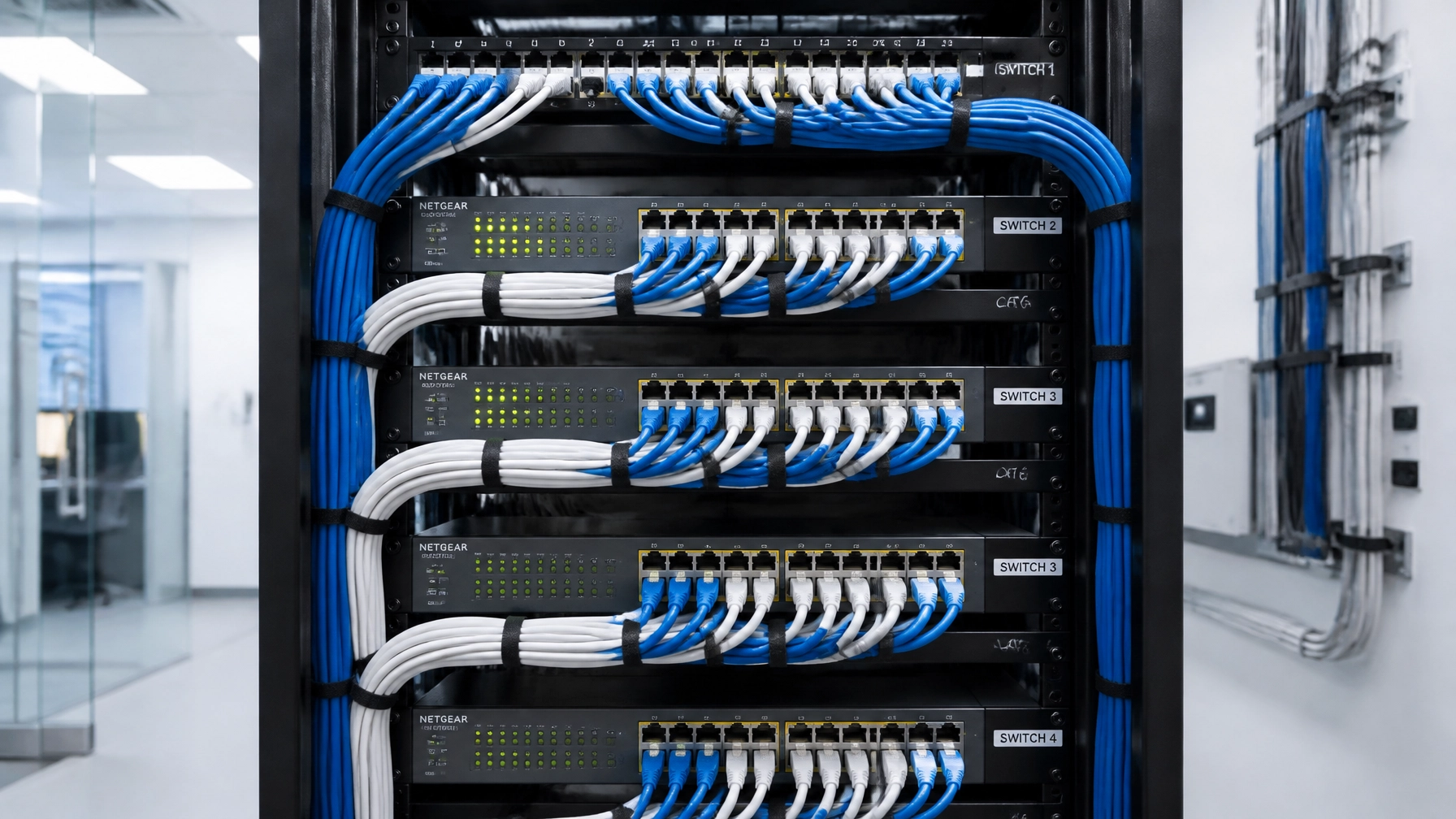
With the shift toward wholesale fiber and NG911, the physical infrastructure inside your office is more important than ever. High-speed internet is only as good as the wires that carry it to your desks.
The CRTC changes highlight the need for reliable, high-bandwidth internal networks. Many businesses are finding that their old Cat5 cabling can't handle the data requirements of modern video phones and high-definition VoIP. Investing in professional structured cabling services is now a prerequisite for a stable communication setup.

9. Modernizing Hardware: IP Phones vs. Softphones
As legacy lines disappear, the choice of hardware becomes more strategic. The CRTC's focus on security and STIR/SHAKEN means your hardware must be capable of handling encrypted SIP signaling.
Many businesses are upgrading to modern Grandstream IP phones that offer built-in security features and support for the latest codecs. Whether you prefer a physical desk phone or a mobile softphone, your hardware must align with the current 2026 security protocols to ensure clear, uninterrupted communication.
10. The Importance of 24/7 Award-Winning Support
Navigating these changes: from NG911 compliance to STIR/SHAKEN attestation: can be a technical nightmare for a busy business owner. The "problem" is the complexity of the new regulations; the "solution" is an expert partner.
In 2026, you shouldn't have to be a telecom expert to run your business. Choosing a provider that offers end-to-end solutions, from on-premise PBX installation to ongoing 24/7 support, is the only way to ensure your communication remains a tool for growth rather than a liability.
Conclusion: Adapting to the New Normal
The 2026 CRTC changes have one goal: to modernize Canadian telecommunications for a digital-first world. While the regulations may seem daunting, they actually provide businesses with more flexibility, better security, and higher service standards than ever before.
If you are currently evaluating Cloud PBX Canada options, look for a partner that doesn't just sell you a service, but actively manages these regulatory complexities for you. From ensuring your structured cabling services are up to par to configuring your NG911 data, the right partner makes the transition seamless.
Ready to upgrade your business communication?
At Voiswitch, we handle the technical "headaches" so you can focus on your business. Whether you need a simple IP phone setup or a comprehensive cloud call center solution, we provide the award-winning support and expertise required in this new era of Canadian telecom.