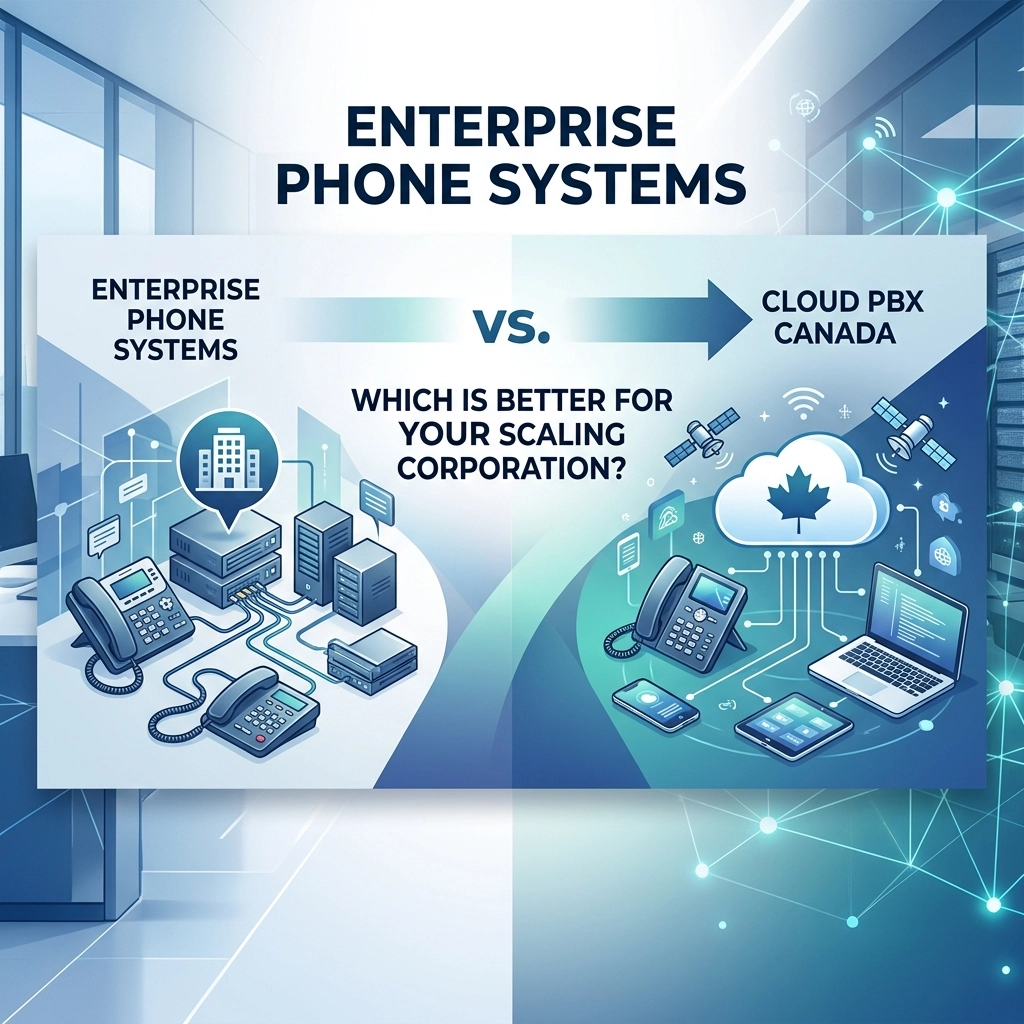
In the modern Canadian business landscape, agility is everything. Whether you are a growing startup in Toronto or an established logistics firm in Vancouver, the ability to add new employees, open branch offices, and handle increased call volumes is critical. Cloud PBX technology is often marketed as the "infinite" solution for this growth. The theory is simple: since the brain of your phone system lives in the cloud, scaling should be as easy as flipping a switch.
However, many Canadian business owners find that as they grow, their "seamless" system begins to crack. Dropped calls, jittery audio, and administrative headaches start to emerge. If your cloud pbx canada system feels like it’s hitting a wall, the problem likely isn't the cloud: it’s how your local environment and provider ecosystem are supporting it.
Here are the 10 most common reasons your system isn't scaling and the professional steps you can take to fix them.
1. You’ve Outgrown Your Current Bandwidth
The most common bottleneck for business voip canada users isn't the software; it’s the pipe leading into the building. A single VoIP call doesn’t use much data, but when you scale from 5 users to 50, the cumulative demand on your internet connection is significant. If you are still running on a standard retail-grade connection, your voice packets are competing with software updates, video calls, and web browsing.
The Fix: Audit your current internet usage. If you are scaling, consider a dedicated fiber connection or a secondary line specifically for voice traffic. Understanding how to choose the best business internet providers in Canada can help you ensure your infrastructure supports your growth.
2. Neglected Structured Cabling Services
As businesses add more desks, they often resort to "daisy-chaining" IP phones or using Wi-Fi for voice. While this works for a skeleton crew, it is a recipe for disaster at scale. Old Cat5 cabling or poorly terminated jacks can cause packet loss that the cloud cannot fix.
The Fix: Invest in professional structured cabling services. High-quality Cat6 cabling ensures that every desk has a stable, high-speed connection back to the switch. When moving into a new space or expanding an existing one, consult a guide on how to choose the best structured cabling services to avoid performance bottlenecks.

3. Lack of Quality of Service (QoS) Configuration
Without Quality of Service (QoS) settings on your router, your network treats a voice packet (which must arrive in real-time) the same way it treats an email (which can wait a second). As you scale and network traffic increases, the lack of prioritization leads to "choppy" audio.
The Fix: Upgrade to a business-grade router that supports advanced QoS. You need to "tag" your voice traffic so it always moves to the front of the line. Check our selection of professional routers that can handle high-density VoIP environments.
4. Hardware Limitations and "Legacy" IP Phones
Scalability isn't just about the server; it's about the endpoints. If you are trying to scale a modern cloud system using decade-old hardware, you will miss out on efficient codecs and security features. Older phones often lack the processing power to handle modern encryption, leading to lag during high-volume periods.
The Fix: Standardize your fleet. Using a consistent line of IP phones allows for easier provisioning and management as you add users. Newer models are designed to handle the high-definition audio demands of modern cloud environments.
5. Suboptimal Licensing Models
Scaling often becomes a financial burden because of rigid licensing. Some providers charge heavily for features you don't need or make it difficult to add single users without jumping into a higher tier. If your monthly bill is ballooning faster than your headcount, your licensing model is the bottleneck.
The Fix: Look for a provider with transparent, per-user pricing. The goal of a cloud pbx canada system is to provide a predictable "pay-as-you-grow" model. Evaluate your current contract to ensure you aren't paying for "ghost" licenses or unused capacity.
6. The "On-Premise vs. Cloud" Mismatch
Sometimes, businesses try to scale a hybrid system that isn't truly cloud-native. If you are using an on-premise PBX with "cloud features" bolted on, you still have the hardware limitations of the physical box in your server room. This is the opposite of true scalability.
The Fix: Determine if your business is better suited for a pure cloud environment or a robust on-premise solution. Our deep dive into On-Premise IP PBX vs. Cloud PBX Canada can help you decide which path allows for the most efficient long-term growth.

7. Poor Integration with Business Tools (CRM/ERP)
As a business grows, manual entry becomes a liability. If your phone system doesn't "talk" to your CRM (like Salesforce or HubSpot), your staff will spend more time logging calls than making them. A system that doesn't integrate doesn't scale; it just creates more work.
The Fix: Ensure your business voip canada provider offers API integrations or native connectors for your essential software. When your phone system automatically surfaces customer data during a call, your team remains efficient even as call volumes double.
8. Inadequate Staff Training and Onboarding
A system can't scale if the people using it don't know how. If your employees struggle with basic tasks like transferring calls, setting up "Find Me/Follow Me," or accessing voicemail-to-email, your support tickets will skyrocket as you add more staff.
The Fix: Create a standardized onboarding process for new hires. Use a provider that offers an intuitive user portal. For a refresher on the basics, you can refer to the ultimate guide to VoIP for small business Canada, which covers the essential features every user should master.
9. Security Vulnerabilities and "Shadow IT"
As you grow, your attack surface increases. If your system isn't configured with robust security protocols, hackers may attempt to use your lines for international toll fraud. Many businesses find that when they scale, their IT department loses track of which devices are connected to the network, leading to "Shadow IT" risks.
The Fix: Implement strict security policies, including complex passwords and multi-factor authentication (MFA) for the PBX admin portal. Ensure your IP PBX or cloud system is regularly updated to the latest firmware to patch vulnerabilities.
10. Working with a "One-Size-Fits-All" Provider
Some national providers offer great rates but zero support. When you hit a technical snag during a growth spurt, you can't afford to wait 48 hours for a ticket response. Scaling requires a partner, not just a utility provider.
The Fix: Switch to a provider that specializes in the Canadian market and offers localized support. You need a team that understands the nuances of business voip canada and can provide a detailed comparison of how their services will adapt to your 5-year growth plan.

Scaling is a Strategy, Not an Accident
Scaling a cloud pbx canada system effectively requires looking beyond the "cloud" label. It involves a holistic approach that includes your physical network, your hardware choices, and your choice of partner.
If you find that your current setup is holding you back, it is likely time to audit your infrastructure. Whether it's upgrading to professional-grade IP phones or reconsidering your structured cabling services, taking these steps now will ensure that your communication system is an engine for growth rather than a roadblock.
At Voiswitch, we help Canadian businesses navigate these hurdles every day. By focusing on professional deployment and robust local support, we ensure your transition to the cloud: and your subsequent growth: is as seamless as it was promised to be. Ready to fix your scaling issues? Explore our blog for more expert advice on optimizing your business communications.