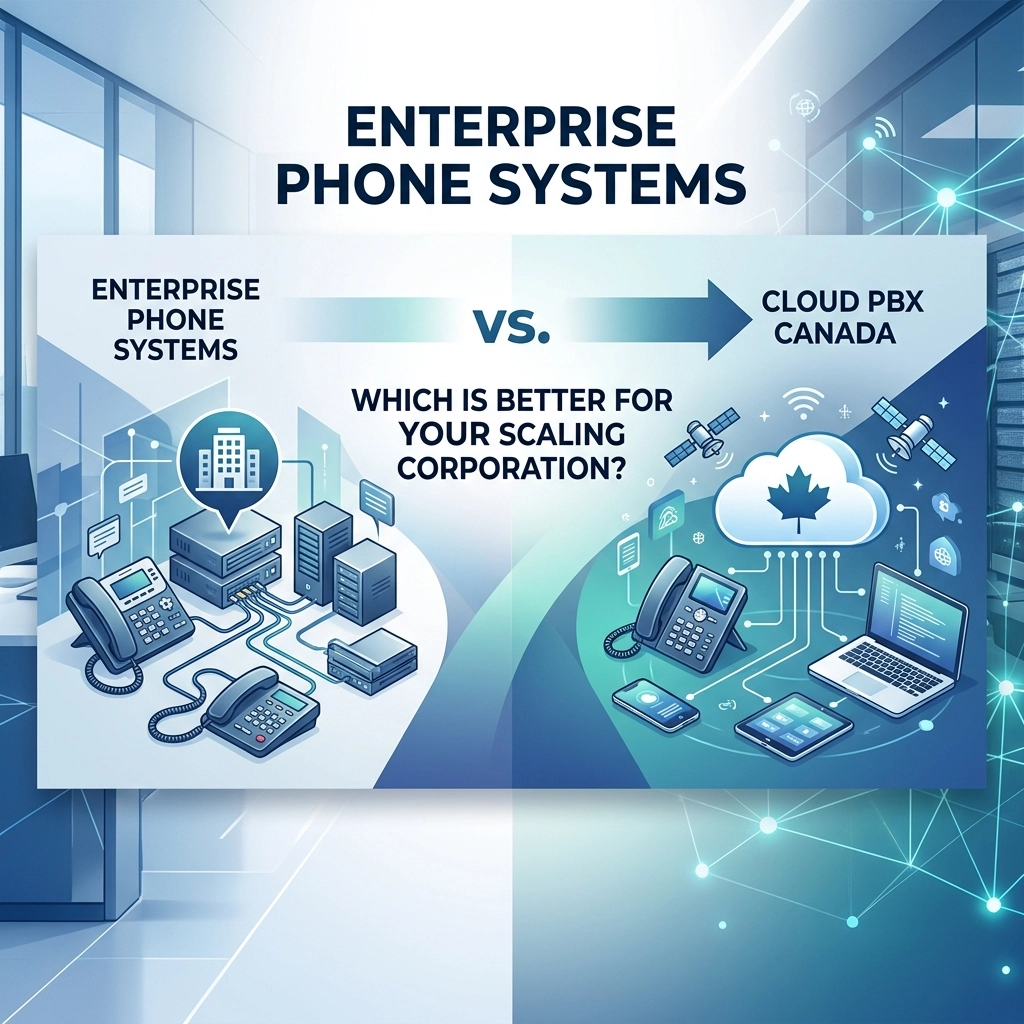
Choosing an internet provider used to be a simple matter of looking for the lowest price per month. In the modern Canadian business landscape, however, your internet connection is the central nervous system of your entire operation. Whether you are running a high-traffic retail storefront, a busy law firm, or a growing tech startup, your choice of provider dictates how effectively you can utilize tools like cloud pbx canada and team collaboration software.
As we move further into 2026, the demand for bandwidth is only increasing. A connection that worked for five employees three years ago will likely buckle under the weight of today’s high-definition video conferencing, cloud-based ERP systems, and AI-driven automation.
In this guide, we will break down how to assess your needs, compare the major Canadian players, and ensure your infrastructure is ready for scalable growth.
Why Your Residential Connection is Holding You Back
Many small business owners start with a residential-grade internet plan to save costs. While this might work for a solo entrepreneur, it quickly becomes a liability as you scale. The fundamental "problem" with residential service is the lack of a Service Level Agreement (SLA).
Residential connections are built on "best-effort" delivery. If the neighborhood node is congested, your speeds drop. If the line goes down, you are at the bottom of the repair queue behind thousands of other homes.
A professional business internet plan offers:
- Symmetrical Speeds: Essential for business voip canada applications where upload speed is just as important as download speed.
- Dedicated Support: Priority troubleshooting to ensure your business stays online.
- Static IP Addresses: Necessary for hosting servers, running VPNs, or managing certain security camera systems.
- Uptime Guarantees: Financial credits or hardware redundancies that protect your bottom line.

How to Assess Your Current and Future Data Needs
Before you start shopping for a provider, you need to conduct a needs assessment. Most businesses over-buy or under-buy because they haven’t audited their actual usage.
1. Count Your Users and Devices
It isn't just about the number of employees. Consider every laptop, smartphone, tablet, smart thermostat, and IP camera. Each "thing" in your office consumes a slice of the bandwidth pie.
2. Evaluate High-Bandwidth Applications
Are you regularly hosting 20-person Zoom calls? Do you upload large video files to the cloud? If your business relies heavily on a cloud pbx, latency and jitter are more important than raw download speed. Voice traffic requires a stable, "clean" connection to avoid dropped calls or "robotic" audio.
3. Plan for a 3-Year Horizon
Switching providers is a hassle. When choosing a plan, don't just look at what you need today. If you plan to double your staff over the next two years, choose a provider that offers an easy path to upgrade without replacing your physical hardware.
Fiber vs. Cable: Which is Best for Scalability?
In Canada, you generally have two primary choices for high-speed delivery: Fiber-optic and Coaxial Cable.
Fiber-Optic (The Gold Standard)
Providers like Bell and Telus have invested heavily in pure fiber networks. Fiber is superior for scalability because it offers massive bandwidth capacity and symmetrical speeds. If you have 50 employees all using a cloud pbx canada solution simultaneously, fiber provides the low latency required for crystal-clear communication.
Coaxial Cable (The Versatile Choice)
Providers like Rogers, Shaw (now part of Rogers), and Cogeco utilize cable networks. While download speeds are often very high, upload speeds are typically lower than fiber. Cable is widely available and often more cost-effective for smaller offices that don't require heavy data uploads.

Major Canadian Providers by Region
Canada’s telecommunications landscape is highly regional. Depending on where your office is located, your options will vary significantly.
Eastern Canada (Ontario, Quebec, Atlantic)
- Bell: Known for their "Pure Fibre" network. In major hubs like Toronto and Montreal, Bell offers speeds up to 6 Gbps. They are a top choice for enterprises needing dedicated internet lines.
- Rogers: A dominant player in Ontario and Atlantic Canada. Their business packages often include integrated security features and 5G failover options.
- Cogeco: A strong contender in parts of Ontario and Quebec, offering competitive pricing for SMEs who need reliable cable internet without the "Big Telco" complexity.
Western Canada (BC, Alberta, Saskatchewan, Manitoba)
- Telus: Similar to Bell in the East, Telus is the fiber powerhouse of the West. Their focus on network reliability makes them a preferred partner for companies scaling their digital footprint.
- Shaw (Rogers): Now operating under the Rogers brand, Shaw’s infrastructure remains a staple for Western Canadian businesses, offering robust managed WiFi solutions.
| Business Size | Recommended Technology | Key Provider Examples |
|---|---|---|
| Small (1-10 users) | Business Cable | Cogeco, Rogers |
| Medium (11-50 users) | Fiber or Hybrid | Telus, Bell, Rogers |
| Enterprise (50+ users) | Dedicated Fiber (DIA) | Bell, Telus |
The Infrastructure Bridge: Structured Cabling
You can have the fastest 10 Gbps fiber line in the country, but if your office is running on old Cat5 cables or a consumer-grade WiFi router, your employees will still experience lag.
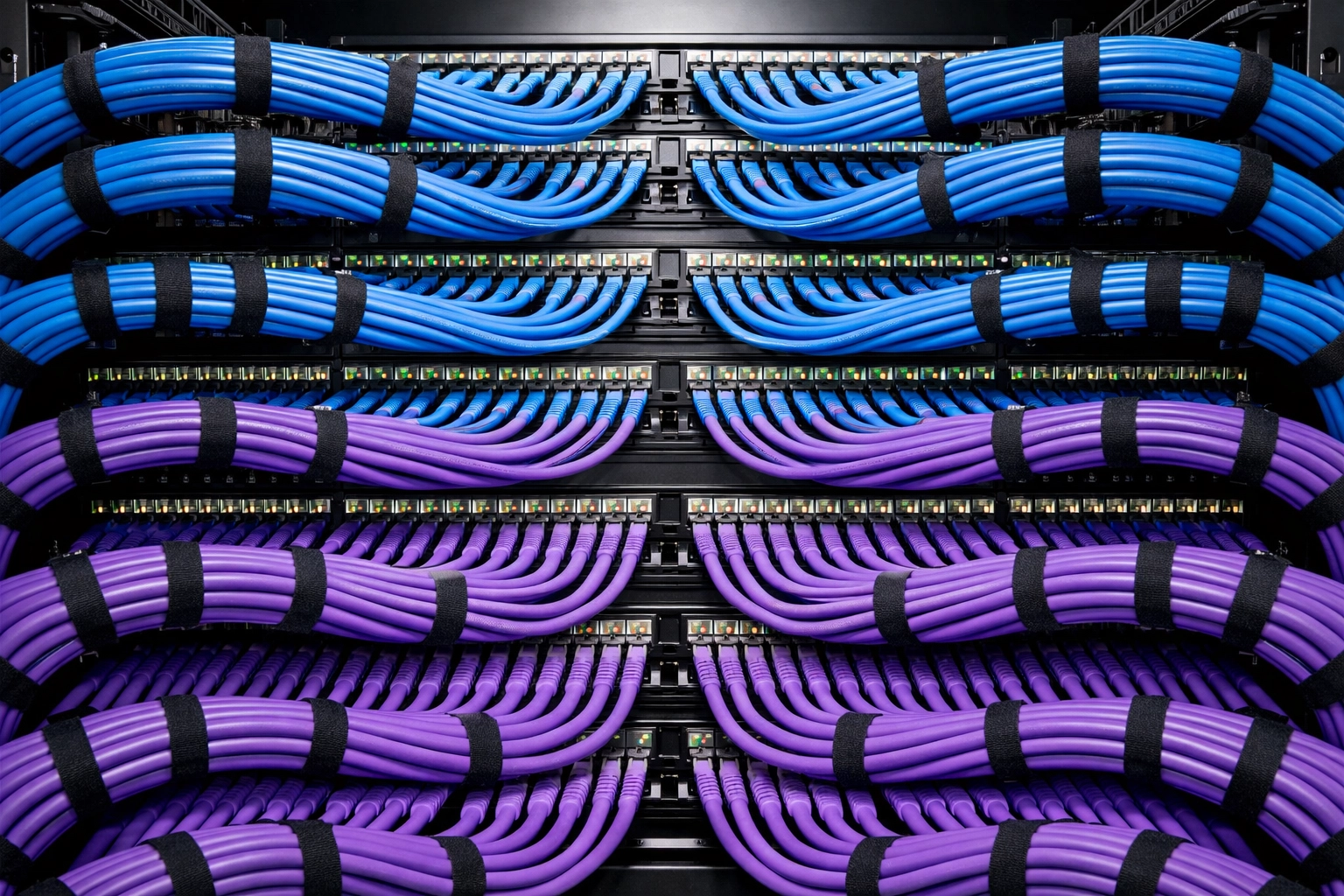
This is where structured cabling services become vital. Scalable growth requires an organized wiring system that supports high-speed data transfer between your server room and individual workstations. Proper cabling ensures that your IP phones and computers receive the full speed you are paying for from your provider.
Enhancing Reliability with Redundancy
For a scaling business, an internet outage isn't just an inconvenience; it's a total shutdown of sales and support. When comparing providers, ask about redundancy options.
Many modern businesses use a primary fiber line from one provider (e.g., Bell) and a secondary, lower-cost cable or LTE/5G failover from another (e.g., Rogers). This "Dual-WAN" setup ensures that if a construction crew accidentally cuts a fiber line down the street, your SIP trunks and cloud services automatically switch to the backup line without dropping a single call.
The Connection to VoIP and Cloud PBX
The primary reason our clients at Voiswitch look for better internet is to support their communication systems. A legacy phone system doesn't care much about your internet speed, but a modern cloud pbx canada setup thrives on it.
When you choose a provider, ensure they offer:
- Quality of Service (QoS) support: The ability to prioritize voice traffic over a large file download.
- Low Latency: Ideally under 50ms to ensure no lag in conversations.
- No Data Caps: Business plans should always be unlimited to avoid "bill shock" as your team grows.
If you are unsure if your current connection can handle a transition to the cloud, you can check our FAQ section or contact our support team for a network assessment.
Key Questions to Ask a Potential Provider
Before signing a three-year contract, put these questions to your sales representative:
- Is this "Pure Fiber" to the building, or fiber to the node? (Pure fiber is always better).
- What is the guaranteed uptime in the SLA?
- Is there a dedicated account manager for business clients?
- Can I easily upgrade my speed next month if I hire five new people?
- Do you offer 24/7 technical support?

Final Thoughts: Investing in Your Foundation
Choosing the best business internet provider in Canada isn't just about the monthly price tag. It's about building a foundation that allows your business to move fast without breaking.
By prioritizing fiber where available, ensuring you have the right structured cabling in place, and selecting a provider that understands the unique needs of business voip canada, you eliminate one of the biggest bottlenecks to growth.
If you’re ready to upgrade your business communication and need a partner who understands the intersection of high-speed internet and professional VoIP, reach out to Voiswitch today. We help Canadian businesses navigate the complexities of telecommunications so they can focus on what they do best: growing.