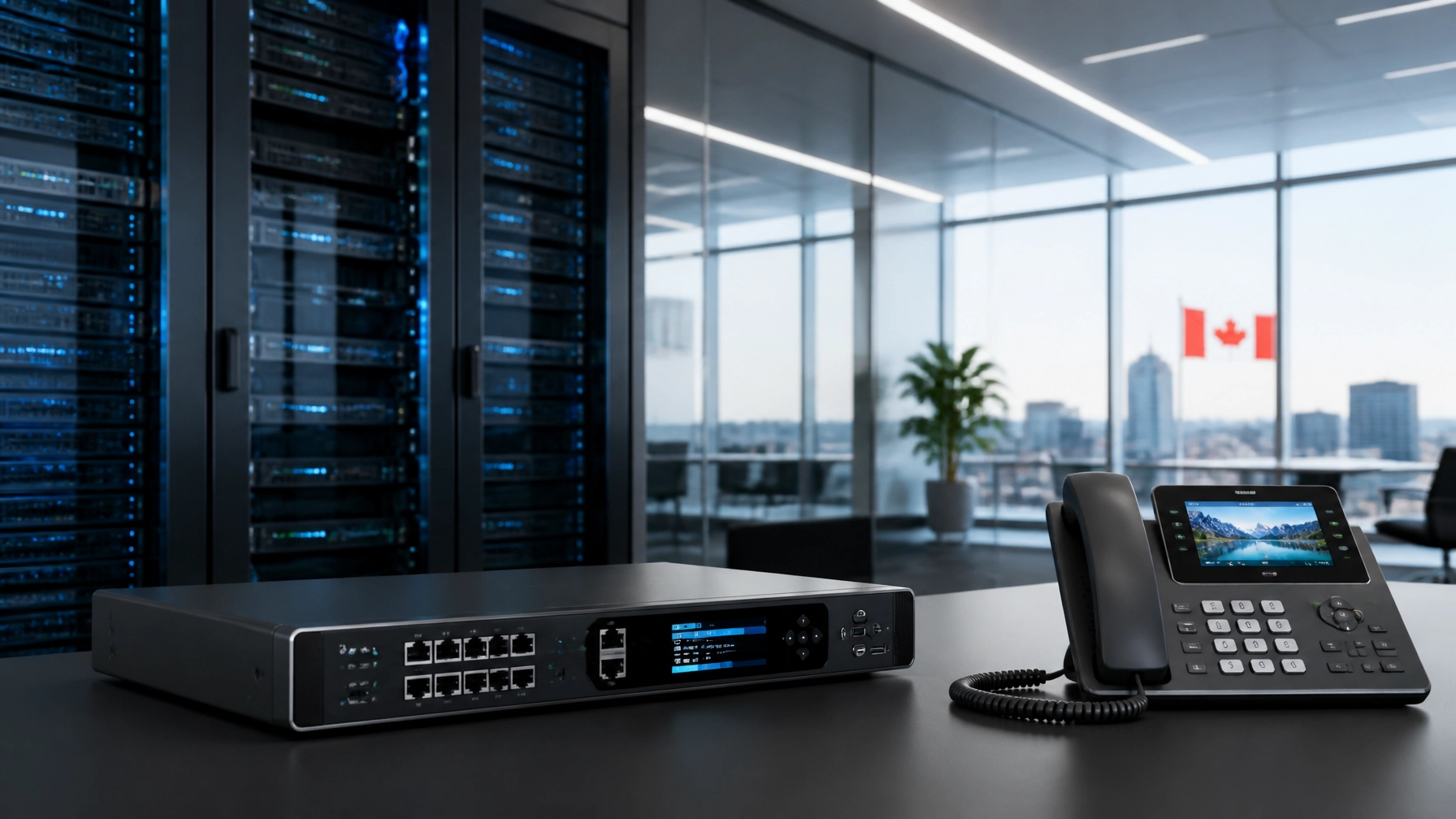
For many Canadian business owners, the transition from a traditional "landline" system to a modern business VoIP Canada solution feels like a necessary but daunting leap. The heart of this transition is the IP PBX (Internet Protocol Private Branch Exchange): the physical or virtual "brain" that manages your calls, extensions, and connectivity.
The problem with legacy hardware is that it lacks the scalability and remote-work capabilities required in today’s landscape. If your current system feels like a liability rather than an asset, upgrading to modern IP PBX hardware is the solution. This guide will walk you through the top hardware options available in Canada, comparing the industry giants to help you make an informed investment.
What is an IP PBX, and Why Does Hardware Matter?
An IP PBX is a business phone system that delivers voice and video over data networks. Unlike old analog systems that required massive wall-mounted boxes and specialized wiring for every single extension, modern IP PBX hardware is compact, powerful, and runs on standard networking equipment.
While cloud PBX Canada solutions are incredibly popular for their low upfront cost, many organizations: especially those in the automotive, retail, and manufacturing sectors: prefer on-premise hardware. Choosing the right hardware ensures:
- Total Ownership: No per-user monthly licensing fees for the core PBX functions.
- Security: Your data stays within your local network.
- Reliability: You are less dependent on external cloud provider outages.
How to Size Your IP PBX Hardware
Before looking at brands, you must define your technical requirements. Selecting a system that is too small leads to dropped calls and lag, while over-speccing results in wasted capital. Use this checklist to determine your needs:
- User Count: How many extensions do you need today, and how many will you need in three years?
- Concurrent Calls: This is the most critical metric. How many people will be on the phone at the exact same time?
- Physical Connectivity: Do you need FXO ports for traditional analog lines, or will you use SIP Trunks exclusively?
- Expansion Ports: Will you need to connect legacy equipment like fax machines or door buzzers?
Top IP PBX Hardware Brands Compared
In the Canadian market, three brands dominate the on-premise hardware space: Grandstream, Yeastar, and Sangoma. Each offers a different value proposition depending on your business size and technical expertise.
1. Grandstream UCM6300 Series (The Value Leader)

Grandstream has become a staple for Canadian SMBs because of its aggressive pricing and comprehensive feature set. The Grandstream UCM series is an all-in-one appliance that handles voice, video, and data without any recurring licensing fees.
- Best For: Small to mid-sized businesses (10–500 users) that want a "set and forget" system.
- Pros: Built-in video conferencing, mobile apps (Wave), and easy remote management via the Grandstream Device Management System (GDMS).
- Cons: Less customizable than open-source platforms for highly specialized routing needs.
2. Yeastar P-Series (The User-Friendly Choice)

Yeastar is often praised for its sleek interface and "app-like" experience. Their P-Series appliances are designed for businesses that may not have a full-time IT department but still need enterprise-grade features.
- Best For: Retailers and hospitality businesses that prioritize ease of use and mobile integration.
- Pros: Excellent Linkus mobile/desktop apps, visual call-flow designer, and solid support for remote workers.
- Cons: While the core hardware is great, some advanced features may require subscription tiers.
3. Sangoma / FreePBX Appliances (The Power User Choice)
Sangoma is the steward of FreePBX, the world’s most popular open-source PBX software. Their hardware appliances are built to run this robust software with maximum stability.
- Best For: IT-savvy organizations, call centers, and enterprises with complex custom integrations.
- Pros: Unmatched flexibility. If you can imagine a call flow, FreePBX can build it.
- Cons: Higher learning curve. You generally need a professional integrator or a skilled internal IT team to manage it.
Hardware vs. Cloud PBX: Which is Right for You?
One of the most common questions we receive at Voiswitch is whether to buy hardware or go entirely cloud-based.
The Case for Hardware:
If you have a stable office location with 50+ employees, the ROI on hardware is usually reached within 18–24 months. By eliminating the $20–$30 per user, per month fee associated with many cloud providers, you can save thousands of dollars over the life of the system.
The Case for Cloud:
If your team is 100% remote or if you have multiple small "micro-offices" across Canada, a cloud PBX Canada solution is likely more efficient. It removes the need for local server maintenance and provides a unified experience regardless of geography.
The Infrastructure Factor: Don't Forget the Wiring
No matter how expensive your IP PBX hardware is, it will fail to perform if your office wiring is subpar. VoIP traffic is sensitive to latency and "jitter." This is where structured cabling services come into play.

When installing a new IP PBX, ensure your office is equipped with:
- Cat6 or Cat6a Cabling: To support high-speed data and voice simultaneously.
- PoE (Power over Ethernet) Switches: To power your IP phones directly through the network cable, reducing clutter.
- A Dedicated Voice VLAN: To prioritize your phone calls over standard web browsing traffic, ensuring crystal-clear audio even during peak usage.
Making the Final Decision
Choosing the best IP PBX hardware for your Canadian business boils down to balancing three factors: Scale, Skill, and Savings.
- Scale: If you are a small team of 15, a Grandstream UCM6301 is an unbeatable value. If you are a 500-seat call center, a Sangoma appliance or a virtualized server is more appropriate.
- Skill: Do you have an IT person on staff? If not, lean toward Yeastar or Grandstream for their intuitive web interfaces.
- Savings: Calculate your total cost of ownership (TCO) over five years. Include the hardware cost, installation, and any SIP trunking fees.
At Voiswitch, we don't just sell boxes; we provide end-to-end communication solutions. Whether you need a simple on-premise PBX installation or a complex multi-site deployment with professional networking, our team is here to guide you.
Ready to Upgrade Your Business Communications?
Reliable communication is the backbone of every successful Canadian business. Don't let outdated hardware hold you back. Contact Voiswitch today for a free consultation and let us help you find the perfect IP PBX solution for your specific needs.