For decades, Canadian businesses have been held hostage by traditional "legacy" phone lines. Whether it’s a stack of copper wires entering your building or a massive, dusty metal box in your server closet, these systems are more than just old technology, they are a financial drain. Between maintenance fees, expensive long-distance charges, and the lack of flexibility for remote work, legacy telecom is essentially a "hidden tax" on your growth.
In the current Canadian business landscape, staying competitive means being agile. If you are still paying for individual PRIs (Primary Rate Interfaces) or POTS (Plain Old Telephone Service) lines from a major carrier, you are likely overpaying by 30% to 50%.
The solution isn't just "getting internet phones." It’s about leveraging specific Business VoIP Canada hacks to optimize your operations and slash your monthly overhead. Here are 7 actionable strategies to move your business from a legacy liability to a modern, cost-saving powerhouse.
1. Consolidate with SIP Trunking
One of the biggest money-wasters in legacy telephony is paying for "lines" you don’t use. In a traditional setup, if you have 20 employees, you might be paying for 20 individual lines or a full T1/PRI circuit, regardless of how many people are actually on the phone at once.
The Hack: Switch to SIP Trunking.
SIP Trunks allow you to decouple your phone numbers from physical lines. Instead of paying for a fixed capacity that sits idle, you pay for "concurrent call paths." Most businesses find that they rarely have more than 25% of their staff on external calls simultaneously. By consolidating your legacy lines into a few SIP trunks, you can often cut your monthly fixed costs by half overnight.
At Voiswitch, we help businesses transition their existing on-premise IP PBX systems to SIP trunks, providing a bridge between traditional hardware and modern savings.
2. Embrace the "Softphone First" Strategy
Does every single person in your office really need a $200 desk phone? For many Canadian businesses, the answer is no. Legacy systems forced you to buy proprietary hardware for every desk. With Cloud PBX Canada solutions, the hardware is optional.

The Hack: Deploy softphones for remote and hybrid staff.
A softphone is an application that runs on a laptop, tablet, or smartphone. It carries all the features of a desk phone, extension dialing, transfers, and conference calls, without the hardware cost. By providing IP phones only to key personnel like receptionists or executive assistants, and using softphones for everyone else, you significantly reduce your upfront capital expenditure (CAPEX).
3. Leverage Auto-Attendants to Scale Without Labor
In a legacy environment, managing incoming calls often required a dedicated receptionist or a complex, hard-to-program routing system. Every time you wanted to change your "Closed for Victoria Day" message, you had to call a technician.
The Hack: Use Cloud-based IVR (Interactive Voice Response).
Modern VoIP systems include sophisticated Auto-Attendants that can handle unlimited simultaneous callers. This doesn’t just save on labor; it ensures your customers never get a busy signal. You can set up "press 1 for sales, 2 for support" in minutes through a web portal. This automation allows small Canadian teams to "punch above their weight," appearing as a large, organized corporation while keeping overhead low.
4. Eliminate the "Border Tax" on Long Distance
For businesses in Toronto, Vancouver, or Montreal, doing business with the United States is standard. However, legacy carriers still treat "cross-border" calls as a premium service, often charging exorbitant per-minute rates that add up to hundreds of dollars a month.
The Hack: Choose a provider with inclusive North American calling.
Most modern Business VoIP plans in Canada now include unlimited calling to both Canada and the USA. By switching, you effectively eliminate your long-distance bill. Furthermore, if you have international clients in Europe or Asia, VoIP rates are typically 70% to 90% lower than traditional PSTN rates because the data travels over the internet rather than international circuits.
5. Optimize Your Physical Infrastructure
If you are moving to VoIP, the "pipes" in your building matter. Many businesses experience "choppy" calls or dropped connections because their internal wiring wasn't designed for high-speed data and voice simultaneously.

The Hack: Invest in professional structured cabling services.
A common mistake is trying to run a modern Cloud PBX over 15-year-old Cat5 cables. This leads to troubleshooting costs that far exceed the price of a proper installation. By organizing your server room and ensuring you have certified Cat6 or fiber backbone, you prevent downtime and ensure "crystal clear" HD voice quality. High-quality cabling is the foundation of a zero-maintenance phone system.
6. Right-Size Your Hardware with Modern IP Phones
If you do need physical phones, don't get stuck in a "vendor lock" with proprietary brands that only work with one specific (and expensive) PBX.
The Hack: Use Open-Standard Hardware.
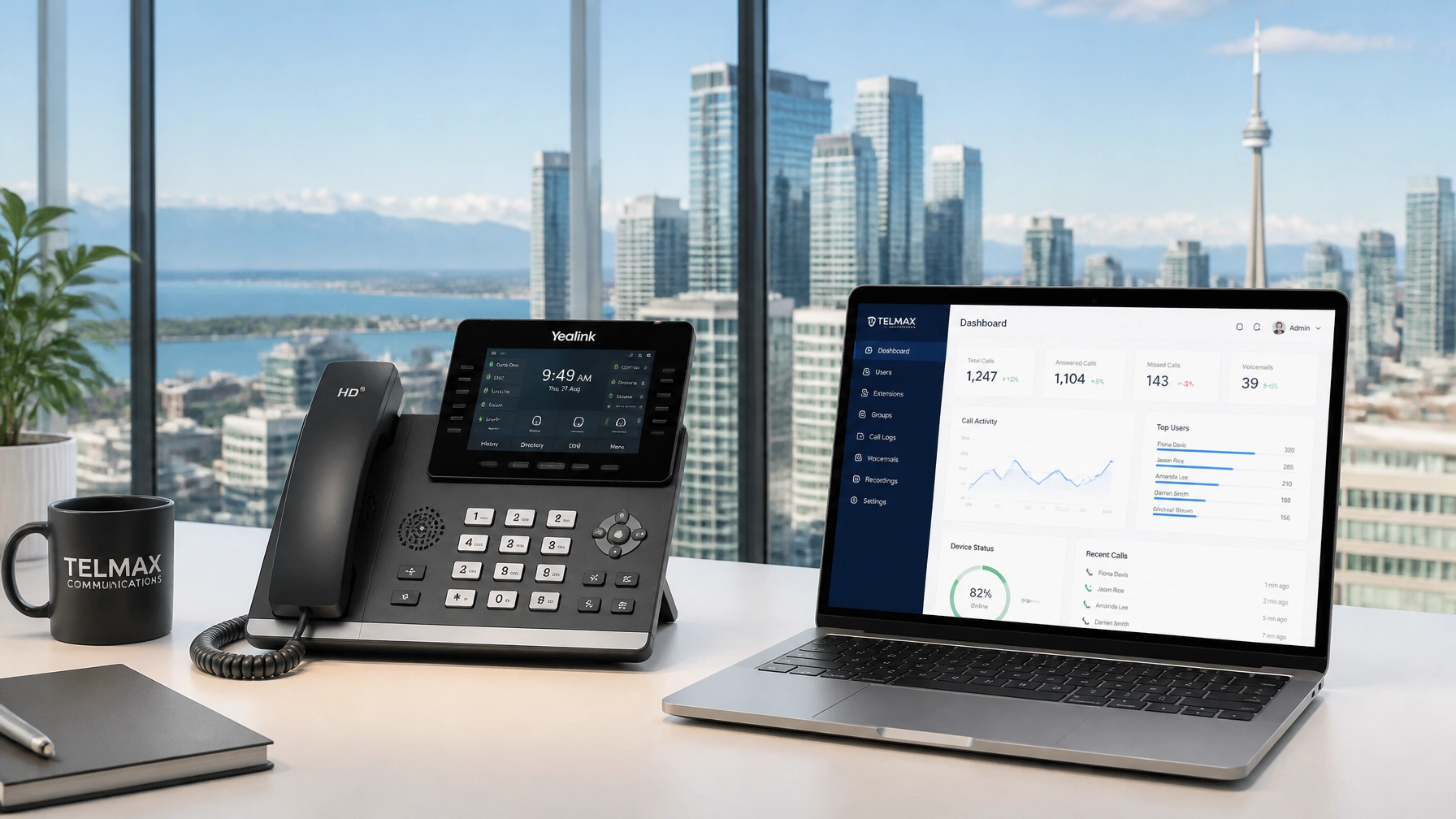
Modern IP phones from brands like Grandstream or Yealink are designed to be flexible. They offer features that legacy phones can only dream of: built-in Bluetooth, Wi-Fi connectivity, and high-resolution color screens for video calls. Because these are "open standard," you can take them with you if you ever change providers, protecting your investment for the long term.

7. Audit Your "Ghost" Lines Quarterly
In the legacy world, businesses often lose track of what they are paying for. We frequently see Canadian companies paying for fax lines they haven't used in five years, or "alarm lines" that were disconnected ages ago.
The Hack: Digital Number Management.
With a cloud system, you have a bird's-eye view of every number (DID) in your inventory. You can see exactly which numbers are receiving traffic and which are dormant. A quarterly "bill hygiene" session, where you delete unused extensions and port over only the essential numbers, can keep your monthly bill lean and mean.
Why the Move to Cloud PBX Canada is Non-Negotiable
The transition from legacy to VoIP isn't just about saving a few dollars; it's about business continuity. Legacy lines are susceptible to physical damage, a backhoe hitting a copper line down the street can take your business offline for days.
With a Cloud PBX Canada setup, your "brains" live in a secure, redundant data center. If your office loses power or the internet goes down, your calls can automatically reroute to employee mobile apps or a secondary location. This level of disaster recovery was once only available to Fortune 500 companies; today, it’s a standard feature for every Voiswitch customer.
Summary Checklist for Canadian SMBs:
- Audit your current bill: Look for "PRI," "Trunk," or "Long Distance" charges.
- Identify unused lines: Can 4 lines do the work of 10? (Usually, yes).
- Assess your cabling: Is your structured cabling ready for 100% digital voice?
- Choose your endpoints: Decide who needs a desk phone and who can thrive with a softphone.
- Plan your migration: Work with a provider that offers 24/7 Canadian support to ensure a seamless "cutover" without losing a single customer call.
Stop letting legacy lines bleed your budget dry. By implementing these seven hacks, you can turn your communication system into a strategic advantage that scales with your business, not against it.
Ready to see how much you can save? At Voiswitch, we specialize in helping Canadian businesses transition from aging legacy systems to state-of-the-art VoIP solutions. Whether you need a full Cloud PBX setup or expert cabling services, our team is here to help 24/7.