
The landscape of Canadian business communication has undergone a massive transformation over the last decade. Traditional copper-wire landlines, once the backbone of every office in Toronto, Vancouver, and Montreal, are rapidly becoming relics of the past. Since 2019, revenue from traditional landline services in Canada has declined by nearly 18% as organizations of all sizes migrate to more flexible, cost-effective solutions.
For the modern Canadian entrepreneur or IT manager, the question is no longer "should we switch?" but rather "how do we switch effectively?" This guide serves as your comprehensive roadmap to understanding business VoIP Canada, implementing a robust cloud PBX Canada solution, and ensuring your physical infrastructure is ready for the future.
What is Business VoIP and Why Does It Matter Now?
Voice over Internet Protocol (VoIP) is a technology that allows you to make and receive voice calls using a broadband internet connection instead of a traditional phone line. While the concept has existed for years, the maturity of Canadian high-speed internet infrastructure has finally made it the most reliable choice for enterprise communication.
In the past, a business would need to install a physical "box" on the wall: a Private Branch Exchange (PBX): and pay a technician every time they wanted to add a new employee or move a desk. With Cloud PBX, the hardware is hosted in secure, geographically redundant data centers. Your "phone system" is now software, accessible from anywhere in the world.

The Problem: The Hidden Costs of Legacy Systems
Many Canadian businesses hesitate to upgrade because their "old system still works." However, legacy hardware presents several hidden liabilities:
- Maintenance Nightmares: Finding parts for a 15-year-old physical PBX is becoming impossible. When a line card fails, your business goes dark until a specialist can source a replacement from the secondary market.
- Lack of Scalability: If you hire five new people, a traditional system requires physical wiring and hardware expansion. In a cloud environment, you simply click "Add User" in a dashboard.
- The Hybrid Work Gap: Traditional systems tether employees to their desks. In a post-2020 world, your team needs to be reachable whether they are in the office, at home, or visiting a client in another province.
By moving to a modern VoIP solution, you solve these problems while typically reducing your monthly telecommunications spend by 30% to 50%.
Key Benefits of Business VoIP for Canadian Organizations
Choosing a business VoIP Canada provider offers specific advantages tailored to our unique market.
Geographic Flexibility and Local Presence
Whether you are based in Halifax but need a Calgary area code to build trust with local customers, VoIP makes it easy. You can own local numbers in every major Canadian city without having a physical office there. This builds immediate "local" credibility.
Advanced Features as Standard
Features that used to cost thousands in licensing fees are now standard. This includes:
- Auto-Attendants: A professional virtual receptionist to route calls.
- Voicemail-to-Email: Receive audio files and transcriptions directly in your inbox.
- Mobile App Integration: Use your business number on your personal smartphone without mixing your private and professional lives.
Enhanced Reliability
Cloud systems are built with "failover" capabilities. If your local office loses power or internet, your calls can automatically route to mobile phones or an alternative branch, ensuring you never miss a lead.
Infrastructure: Why Structured Cabling Services Are the Foundation
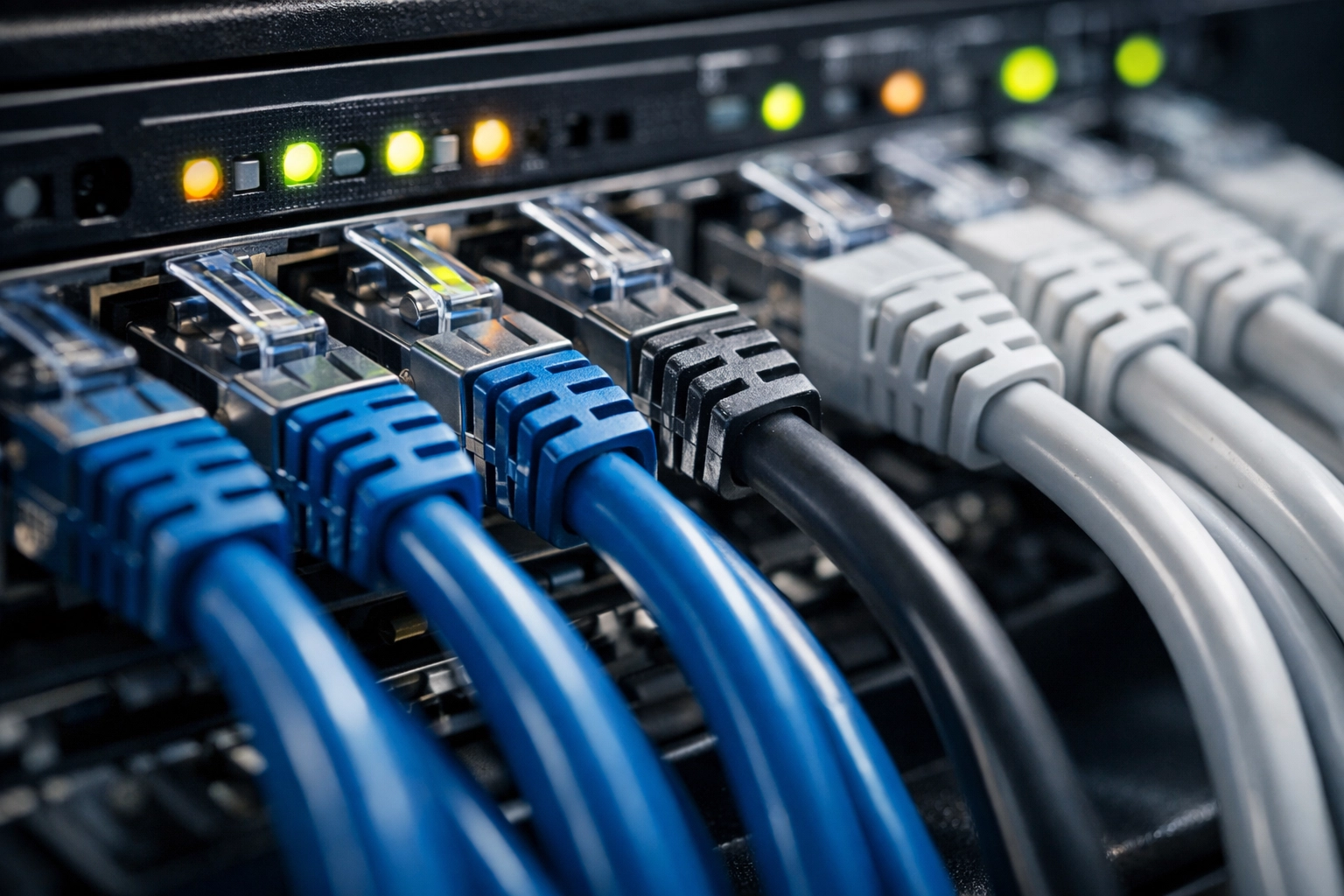
A common mistake businesses make when switching to VoIP is ignoring their physical network. VoIP relies on "packets" of data. If your office wiring is old, damaged, or poorly organized, you will experience "jitter," echoes, or dropped calls.
This is where structured cabling services become critical. To get the most out of your VoIP system, your office should ideally have Cat6 or Cat6a cabling. This high-capacity wiring ensures that your voice data doesn't get stuck behind large file downloads or video streams.
If you are moving into a new office or renovating an existing one, professional cable management and testing are the best investments you can make to ensure long-term voice quality.
Essential Features for a Competitive Edge
When evaluating providers for cloud PBX Canada, look for these specific tools that drive productivity:
CRM Integration
Imagine a client calling your office, and their Salesforce or HubSpot profile automatically pops up on your screen. You immediately see their last order, their current support tickets, and their name. This level of service is only possible through VoIP-CRM integration.
Call Analytics and Reporting
For sales teams or support centers, data is king. VoIP systems provide deep insights into:
- Average wait times.
- Call volume peaks (helping you staff correctly).
- Total talk time per agent.
Toll-Free and Local Number Porting
Under Canadian law, you have the right to keep your existing phone numbers when you switch providers. A professional provider will handle the "porting" process for you, ensuring no downtime during the transition.
Compliance and Safety: E911 and Data Privacy
In Canada, there are two non-negotiable areas of compliance: E911 and data residency.
Understanding E911
Traditional phones are tied to a physical address. VoIP phones can be anywhere. Enhanced 911 (E911) is a system that associates a physical location with your VoIP caller ID. If an employee calls 911 from a VoIP desk phone, the system must be configured to send their specific office location to the emergency dispatcher. You can learn more about how this works on our 911 explained page.
PIPEDA and PHIPA Compliance
For businesses in healthcare, law, or finance, data privacy is paramount. Ensure your VoIP provider adheres to the Personal Information Protection and Electronic Documents Act (PIPEDA). Your call logs, recordings, and metadata should be handled with enterprise-grade encryption and stored securely.

Choosing the Right Hardware
While many users prefer "softphones" (apps on their computer), many still value the tactile feel of a desk phone. The modern IP phone is a powerful computer in its own right.
- Entry-Level: Great for common areas or kitchens.
- Executive Level: Large touchscreens, Bluetooth headset compatibility, and dozens of programmable "speed dial" buttons.
- Conference Phones: 360-degree microphones designed for boardroom clarity.
You can browse a wide range of compatible hardware at our Voiswitch Shop to see what fits your office aesthetic and functional needs.
How to Successfully Switch to VoIP
The transition doesn't have to be a headache. Follow these steps for a smooth migration:
- Assess Your Internet: Ensure you have enough bandwidth. Each VoIP call uses about 100kbps of upload and download speed.
- Audit Your Network: Check your switches and cabling. If your network equipment is over a decade old, consider an upgrade to support Power over Ethernet (PoE), which eliminates the need for messy power bricks at every desk.
- Identify Your Call Flow: Map out how you want calls to be handled. Does the front desk ring first? Should it go to a group of sales reps simultaneously?
- Trial and Training: Set up a few "test" phones before the full rollout. Train your staff on how to transfer calls and check voicemails via the new interface.

The Voiswitch Advantage
At Voiswitch, we don't just sell "dial tones." We provide a comprehensive communication ecosystem tailored for the Canadian market. From structured cabling to high-speed business internet, we ensure every link in your communication chain is strong.
We understand that every business is unique. A law firm in Calgary has different needs than a manufacturing plant in Windsor. That’s why we focus on professional advice and expert implementation rather than "one-size-fits-all" packages.
Conclusion: Future-Proofing Your Business
The migration to business VoIP Canada is more than just a way to save money: it’s a strategic move to make your business more agile, data-driven, and professional. By combining a powerful cloud PBX Canada solution with the right physical infrastructure and hardware, you remove the communication "bottlenecks" that hold your team back.
Are you ready to stop worrying about your phone system and start using it as a growth tool? Whether you need advice on SIP trunks or a full office cabling overhaul, our team is here to help.
Take the next step toward a more connected business.
- Explore our Cloud PBX solutions.
- Check out our FAQ for technical answers.
- Contact us today for a personalized consultation.