
For decades, Canadian businesses relied on the Public Switched Telephone Network (PSTN): those physical copper wires running into your building. While reliable, these legacy systems are increasingly expensive, difficult to scale, and incompatible with the modern demand for hybrid work. As traditional carriers phase out older infrastructure, SIP trunking has emerged as the gold standard for business VoIP Canada.
If you are looking to modernize your communication while keeping your existing on-premise hardware, SIP trunking is the bridge you need. This guide will walk you through the technical essentials, regulatory requirements, and strategic benefits of implementing SIP trunking in the Canadian market.
What is SIP Trunking and How Does it Work?
SIP stands for Session Initiation Protocol. In simple terms, a "trunk" is a digital version of a phone line. Instead of physical wires connecting your office to the phone company, SIP trunking uses your internet connection to carry voice, video, and messaging data.
Think of your internet connection as a highway. SIP trunking creates dedicated lanes on that highway specifically for your voice traffic. It connects your IP PBX system directly to the internet, allowing you to make and receive calls over the web without needing a traditional gateway.

Why Should Canadian Businesses Switch to SIP Trunking?
The move from traditional PRI (Primary Rate Interface) lines to SIP is rarely just about technology; it is about the bottom line. Canadian enterprises often face unique geographical challenges and high telecom costs. SIP trunking addresses these directly.
1. Massive Cost Reductions
Traditional phone lines often force you to pay for capacity you don’t use. If you need 25 lines but your provider only sells them in bundles of 23, you end up paying for 46 lines. SIP trunking allows for granular scaling. You pay for exactly what you need. Most Canadian businesses report a 30% to 40% reduction in monthly telecom expenses after making the switch.
2. Built-in Disaster Recovery
If a physical line is cut at your office, your phones go dead. With SIP trunking, your calls live in the cloud. If your office loses power or internet, calls can be instantly rerouted to mobile devices or another branch. This level of business continuity is a core component of a modern cloud PBX Canada strategy.
3. Support for Hybrid Work
SIP trunking allows you to extend your office phone system to any location with an internet connection. Whether your team is in Toronto, Vancouver, or working from a home office in Halifax, they remain part of the same unified system. This flexibility is essential for businesses navigating the post-pandemic work environment.
Critical Regulatory Requirements: STIR/SHAKEN in Canada
In Canada, the Canadian Radio-television and Telecommunications Commission (CRTC) has implemented strict rules to protect consumers from "spoofed" robocalls. This framework is known as STIR/SHAKEN (Secure Telephone Identity Revisited/Signature-based Handling of Asserted information using toKENs).
Since late 2021, all Canadian voice service providers must implement these protocols. If your SIP provider is not compliant, your outbound calls might be flagged as "Spam" or even blocked by other carriers. When choosing a provider, you must verify their STIR/SHAKEN readiness. This is not just a technical "nice-to-have"; it is a prerequisite for professional business continuity under the Telecommunications Act.
Technical Requirements for a Successful Rollout
Before you flip the switch, you need to ensure your infrastructure can handle the load. SIP trunking is highly efficient, but it does require a solid foundation.
Bandwidth and Quality of Service (QoS)
Each concurrent call requires approximately 100 kbps of bandwidth when using the high-quality G.711 codec. If you have 10 employees on the phone simultaneously, you need at least 1 Mbps of dedicated upload and download speed just for voice.
Beyond raw speed, your network must prioritize voice traffic. This is where structured cabling services and professional-grade routers come into play. Without proper QoS settings, a large file download in the accounting department could cause jitter or dropped calls in the sales department.
Hardware Compatibility
Most modern IP PBX systems, such as those from Grandstream, support SIP trunking natively. If you are using older analog equipment, you may need a VoIP adapter or ATA to bridge the gap.
Step-by-Step Guide to Setting Up Your SIP Trunk
Configuring a SIP trunk is a logical process, but it requires precision. Here is the standard workflow:
- Audit Your Current Usage: Determine how many concurrent calls (sessions) your business actually handles at peak times.
- Gather Your Credentials: Your provider will give you a SIP URI (address), a username, and a password. You will also need your public static IP address.
- Configure the IP PBX: Log into your PBX dashboard. Navigate to the "Trunks" section and enter your provider’s details. Ensure you set the correct "Outbound Routes" so the system knows to send calls through the new SIP pipe.
- Test for Two-Way Audio: A common issue during setup is "one-way audio," where one person can hear but the other can't. This is usually a firewall issue. Ensure your SIP and RTP ports (typically 5060 and 10000-20000) are correctly forwarded.
- Verify Caller ID: Ensure your outbound caller ID matches your registered Canadian DIDs (Direct Inbound Dialing) to maintain STIR/SHAKEN compliance.
Choosing the Right SIP Provider in Canada
Not all SIP providers are created equal. When evaluating options for your business, consider these three factors:
Number Portability
Can the provider port your existing Canadian phone numbers? Under CRTC rules, Local Number Portability (LNP) is standard, but the process can take 3 to 7 business days. A professional provider will manage this transition without downtime.
Geographic Coverage
Some international providers have "blind spots" in Canada. Ensure your provider offers full coverage in the provinces where you operate, including major hubs like Toronto (416/647), Montreal (514/438), and Calgary (403/587).
Transparent Billing
Avoid providers that use "per-channel" pricing if you have low call volume. Look for per-second billing with no setup fees. This ensures your hosted PBX solution remains cost-effective as you grow.

Enhancing Your SIP Trunking Experience with Proper Hardware
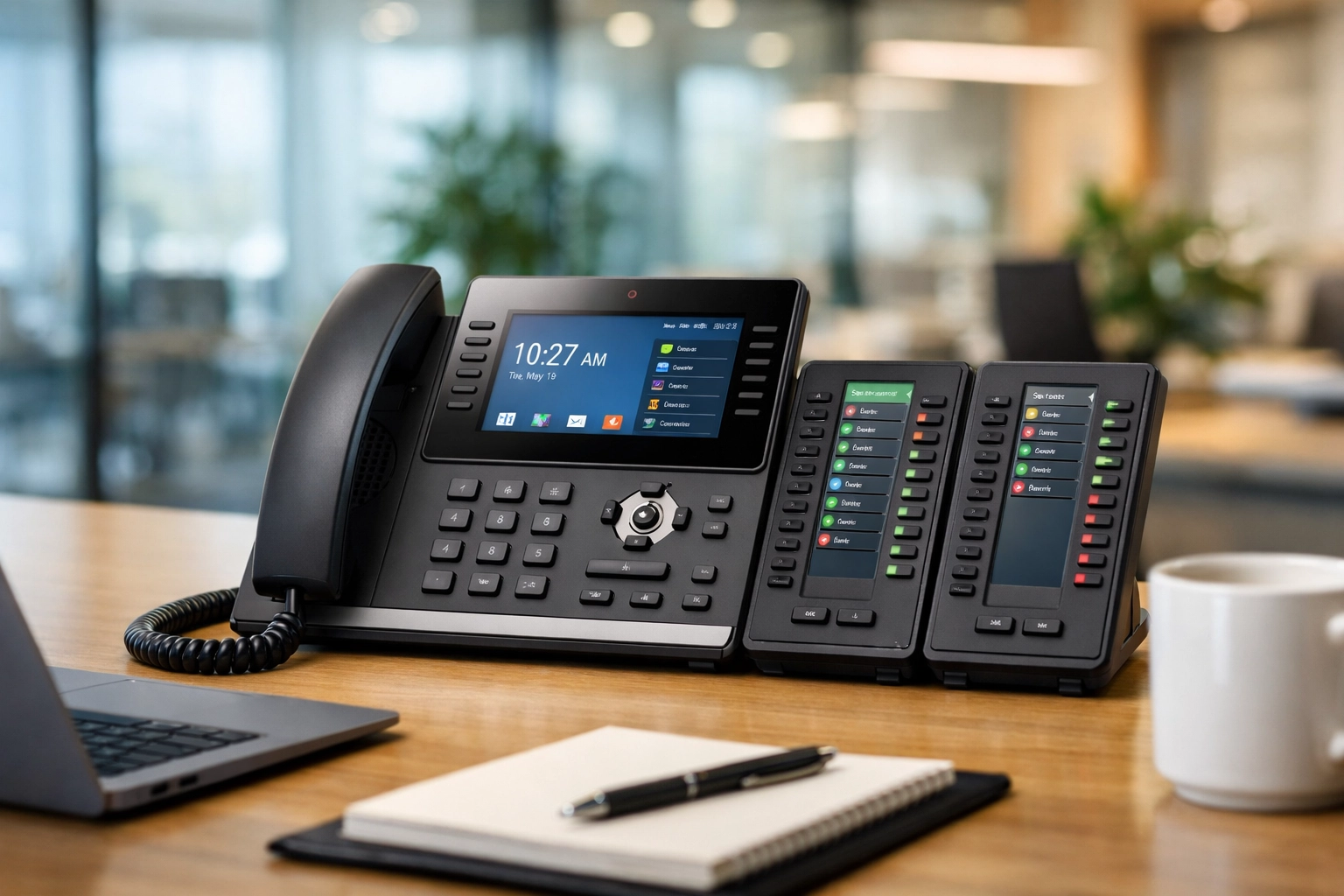
While SIP trunking is a "virtual" service, the way your employees interact with it is through physical hardware. To get the most out of your system, invest in high-quality endpoints.
- For the Desktop: High-definition IP phones provide superior audio quality compared to traditional handsets.
- For the Boardroom: Conference phones designed for VoIP can handle the echo cancellation required for crystal-clear group meetings.
- For Remote Teams: Consider cordless phones or DECT solutions that allow employees to move around the office while staying connected to the SIP trunk.
Security Considerations
Because SIP trunking runs over the internet, security is paramount. "Toll fraud": where hackers gain access to your system to make expensive international calls: is a real threat.
- Use Strong Credentials: Never use default passwords for your SIP accounts or PBX interface.
- IP Whitelisting: Configure your firewall to only accept traffic from your SIP provider's specific IP addresses.
- Encryption: Whenever possible, use TLS (Transport Layer Security) to encrypt your signaling and SRTP (Secure Real-time Transport Protocol) to encrypt the audio itself.

Conclusion: Future-Proofing Your Business
The transition to SIP trunking is more than just a technical upgrade; it’s a strategic move to ensure your business remains competitive in a digital-first economy. By eliminating the "headaches" of legacy hardware and high monthly bills, you free up resources to focus on growth.
Whether you are looking to integrate video phones into your workflow or simply want to reduce your monthly telecom spend, SIP trunking provides the flexibility and reliability that Canadian businesses need to succeed.
If you're ready to modernize your office, start by auditing your current network and hardware. A solid foundation of structured cabling services and a reliable IP PBX will ensure that your move to SIP trunking is seamless and successful. For more insights on modernizing your communications, explore our other guides on the Voiswitch blog.