Communication is the central nervous system of any successful enterprise. For years, Canadian businesses relied on traditional analog "Landline" PBX systems: bulky, expensive hardware boxes hidden in broom closets that required a specialized technician every time you wanted to add a new extension. In 2026, that model is officially a relic of the past.
Modern businesses have shifted toward IP PBX (Internet Protocol Private Branch Exchange) systems. These systems route voice calls over the internet rather than traditional copper wires, offering a level of flexibility and cost-savings that legacy systems simply cannot match. However, with dozens of providers claiming to be the "best," how do you filter the noise to find the right solution for your specific Canadian operational needs?
In this guide, we will break down the differences between deployment models, compare the top contenders in the market, and explain why your choice of hardware and structured cabling is just as important as the software itself.
Why Move Away From Legacy Systems?
If your business is still using a traditional PSTN (Public Switched Telephone Network) system, you are likely overpaying for a limited feature set. Legacy systems are difficult to scale; adding a new employee often means waiting days for a technician to arrive and physically wire a new port.
An IP PBX system eliminates these bottlenecks. By treating voice as data, you gain access to features like:
- Voicemail-to-Email: Receive audio files of your messages directly in your inbox.
- Mobile Integration: Use your office extension on your smartphone via dedicated apps.
- Advanced Routing: Set up complex "Auto Attendants" that ensure callers reach the right department without human intervention.
- Scalability: Add or remove users in minutes through a web-based dashboard.
Cloud-PBX vs. On-Premise IP PBX: Which is Best?
The first decision you must make is where the "brains" of your phone system will live. There are two primary schools of thought: Cloud PBX and On-Premise IP PBX.
Cloud-Based PBX (The Hosted Approach)
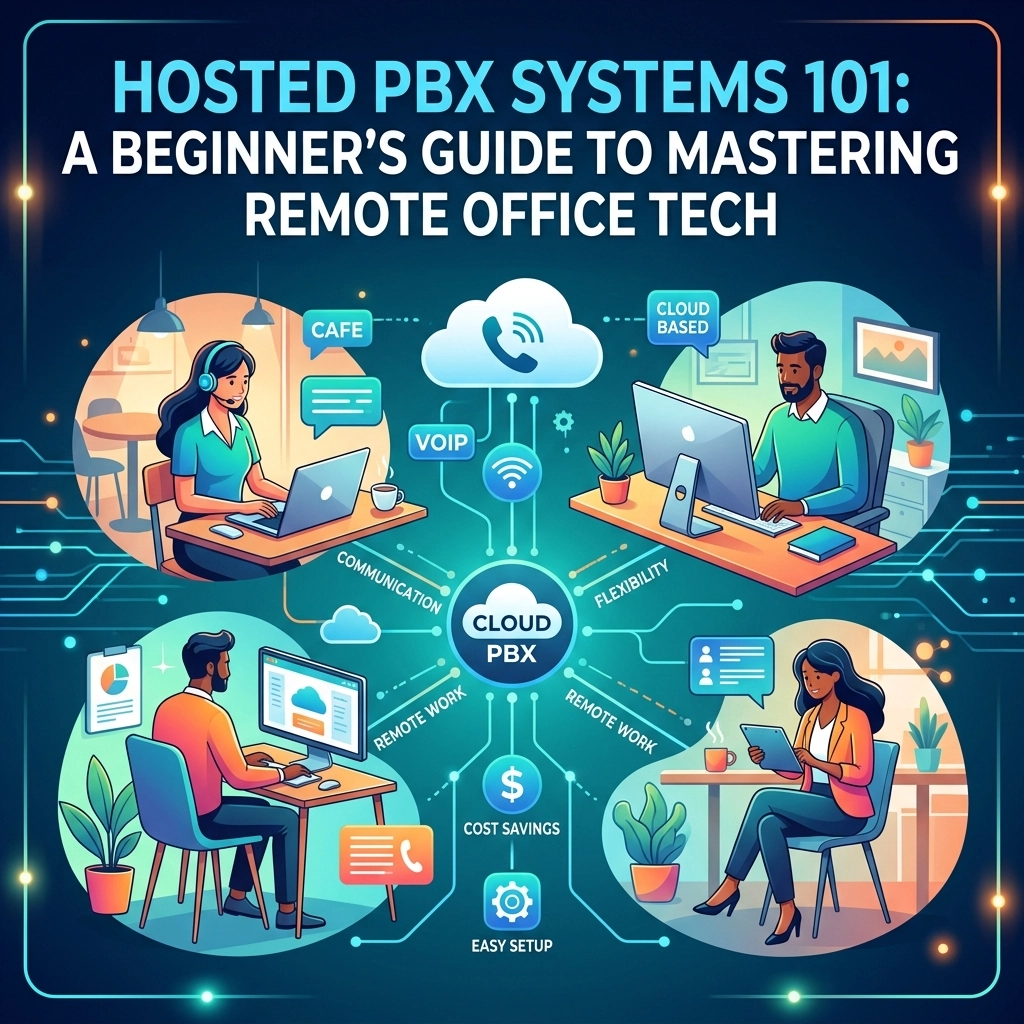
In a cloud setup, the PBX software is hosted by a provider like Voiswitch in a secure data center. You connect your IP phones to the internet, and they "talk" to the remote server.
- Pros: Low upfront cost, no hardware to maintain, perfect for remote or hybrid teams, and automatic security updates.
- Cons: Requires a stable, high-quality business internet connection; monthly subscription fees are perpetual.
On-Premise IP PBX (The Local Approach)
In this scenario, you own the hardware. A physical server (or a virtual machine) sits in your office or server room. You connect your internal network to the outside world via SIP Trunks.
- Pros: Total control over data security, no monthly per-user licensing fees (in some models), and internal calls continue to work even if the internet goes down.
- Cons: Higher initial investment, requires internal IT knowledge for maintenance, and you are responsible for hardware upgrades.

Top IP PBX Systems for Canadian Businesses Compared
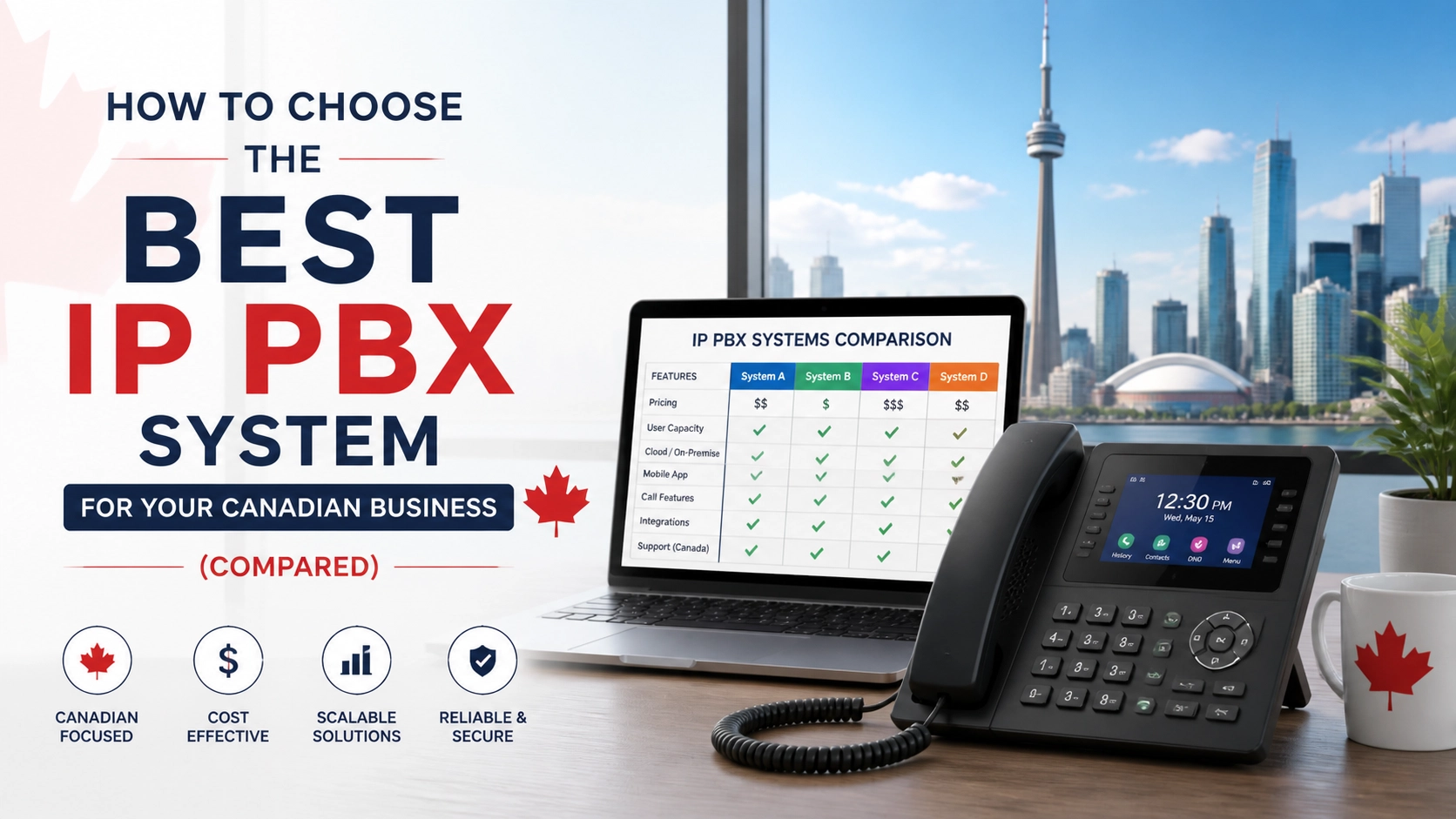
To help you decide, we have analyzed the current leaders in the Canadian market based on reliability, feature set, and value for money.
1. 3CX: The Versatile All-Rounder
3CX has become a dominant force in the IP PBX world because of its flexibility. It can be deployed on-premise on a mini-PC or hosted in the cloud. It is particularly popular because it doesn't charge "per user," but rather by "simultaneous calls."
- Best For: Growing SMBs that want high-end features like video conferencing and CRM integration without the "per-seat" tax.
- Key Advantage: Excellent integration with Microsoft 365 and various CRM platforms.
2. Grandstream UCM Series: The On-Premise Powerhouse
If you want to own your system outright with no recurring licensing fees, the Grandstream UCM series is the gold standard. It is a dedicated hardware appliance that handles voice, video, data, and mobility features out of the box.
- Best For: Businesses with a fixed location and a preference for a one-time capital expenditure (CAPEX) model.
- Key Advantage: No licensing fees for features like call recording or IVR.
3. Nextiva and RingCentral: The Cloud Giants
These are purely hosted solutions. They offer incredible reliability and deep feature sets but are generally more expensive on a monthly basis than managing your own system.
- Best For: Large enterprises or businesses with many satellite offices that need a "set it and forget it" solution.
- Key Advantage: Industry-leading uptime and 24/7 global support.
Critical Technical Considerations for Canada
Choosing a system is only half the battle. To ensure a professional experience, you must consider the local Canadian technical landscape.
E911 Compliance
In Canada, emergency services (911) need to know your exact physical location when you call. This is more complex with IP systems because an IP phone can technically be plugged in anywhere. Ensure your provider offers robust 911 calling suggestions and explains how 911 is handled on their platform.
Structured Cabling
Your IP PBX is only as good as the wires it runs on. Many Canadian offices have old Cat3 or Cat5 cabling that can lead to "jitter" or dropped calls. If you are upgrading your phone system, it is often the best time to audit your structured cabling to ensure you have Cat6 or better for a "clean" voice signal.
Hardware: Beyond the Desktop Phone
While software handles the logic, your employees interact with the hardware. Depending on the job role, you may need different tools:
- Receptionists: Benefit from expansion modules to see who is on a call at a glance.
- Executives: Often prefer video phones for seamless face-to-face meetings.
- Warehouse Staff: Require ruggedized DECT cordless phones that can withstand drops and dust.

Comparison Table: At a Glance
| Feature | Cloud PBX (Hosted) | 3CX (Self-Hosted/Cloud) | Grandstream UCM (On-Prem) |
|---|---|---|---|
| Initial Cost | Very Low | Moderate | High (Hardware) |
| Monthly Cost | Per User (Higher) | Per Channel (Low) | Zero (Licensing) |
| Maintenance | Handled by Provider | Handled by You/Partner | Handled by You |
| Scalability | Instant | Highly Flexible | Limited by Hardware |
| Best For | Remote/Hybrid Teams | Mid-Market Growth | Fixed-Location SMBs |
How to Make the Final Decision
If you are feeling overwhelmed, use this 3-step logic to narrow down your choice:
- Analyze Your User Count and Call Volume: If you have 50 employees but only 10 are ever on the phone at once, a system like 3CX will save you a fortune compared to "per-user" pricing.
- Evaluate Your Infrastructure: Do you have a server room with battery backups? Go On-Premise. Do you work from a shared office or have remote staff? Go Cloud.
- Define Your "Must-Have" Integrations: If your team lives in Salesforce or Microsoft Teams, ensure the PBX you choose has a native integration. Manual "workarounds" usually lead to employee frustration.
Choosing a business voip Canada solution shouldn't be a headache. Whether you are looking for a simple setup or a complex multi-site deployment, the goal is to build a system that fades into the background, allowing your team to focus on what matters: your customers.
Future-Proofing Your Communication
The telecommunications landscape is moving toward unified communications: where your phone, your access control, and your video meetings all live in one ecosystem. By choosing a modern IP PBX today, you aren't just buying a phone system; you are building a foundation for how your business will operate for the next decade.
If you are ready to explore the options or have questions about how to bridge the gap between your current hardware and a new IP-based system, feel free to visit our shop or contact us for expert advice tailored to the Canadian market. We can help you navigate everything from initial SIP Trunks to the final support and training for your staff.
Don't let an outdated phone system be the bottleneck in your business growth. The move to IP PBX is not just a technical upgrade; it's a strategic advantage.